
Russian Toy
🧠 Temperament & character
The Russian Toy is lively, cheerful and decidedly affectionate, while being active and always attentive. He bonds closely with his family and likes to follow his people at every step. As an alert little dog he reliably announces anything unfamiliar, without having to become a yapper if he is well brought up. Towards strangers he can be reserved at first, but quickly warms up within the circle of familiar people.
📜 Origin & history
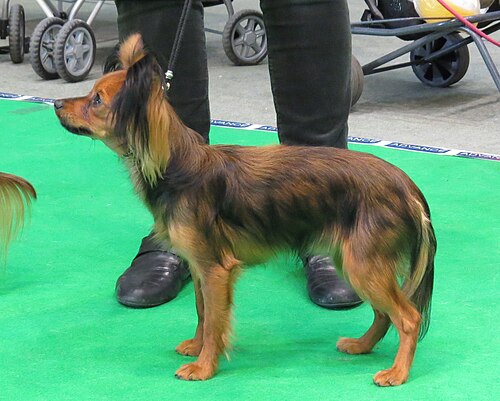
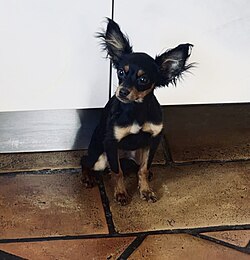
The Russian Toy arose in the 20th century in Russia from the English Toy Terrier, which was popular as a lapdog among the Russian nobility. After the October Revolution the population shrank sharply, so that from the 1950s onwards Soviet cynologists shaped an independent breed from the few remaining animals. In the process, alongside the smooth-haired variant, the characteristic long-haired variant with fringing on the ears and legs also arose. Only in 2006 was the Russian Toy officially recognised by the FCI, and to this day he is comparatively rare outside Russia.
✂️ Grooming, care & training
The Russian Toy's grooming is uncomplicated: the smooth-haired variant needs only occasional brushing, the long-haired a little more attention to keep the fringing looking nice. Despite his small size he is active and enjoys daily walks, games and small mental challenges. He is intelligent and willing to learn, which is why he is easy to train and can even be inspired to tricks or mini agility. Important is consistent, friendly training, so that the lively creature does not become a constant barker.
🩺 Health
For his small size the Russian Toy is astonishingly robust and often reaches an age of twelve to fifteen years. Typical risks are patellar luxation, dental problems, bone fractures from falls as well as a possible open fontanelle on the skull. Responsible breeders examine the knee joints and pay attention to a correct bite and a stable skull. Because of the dainty build, careful dental care and protection from jumps from great heights are especially important.
🏡 Who is this breed right for?
The Russian Toy is an ideal companion for singles, couples, seniors and families with older, considerate children. As a light, active apartment dog he feels comfortable in the city and can be taken along everywhere without trouble. He is also suitable for first-time owners, provided they take his daintiness into account in everyday life and train him consistently. In Switzerland he is a practical, travel-friendly companion who, however, needs a lot of closeness and does not like being left alone for long.