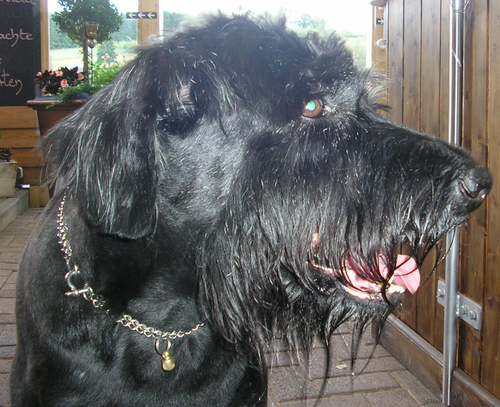
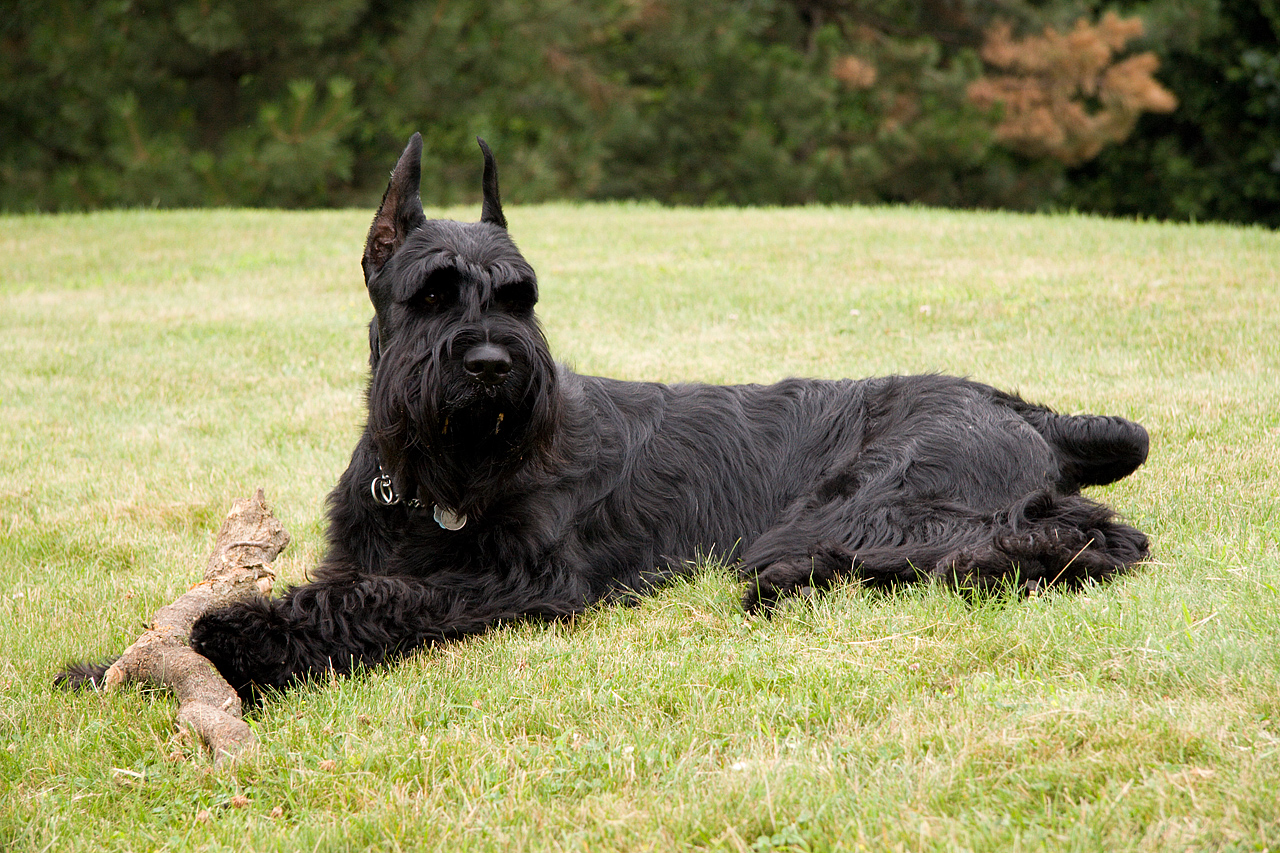
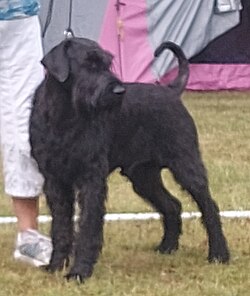
Giant Schnauzer
🧠 Temperament & character
The Giant Schnauzer combines the intelligence and charm of the schnauzers with the strength and will to work of a true service dog. He is self-confident, brave and spirited, loving and playful towards his family, but watchful towards strangers and with a clear protective instinct. He needs a close bond, plenty of occupation and clear, fair leadership, otherwise his energy can turn into nervousness or unwanted behaviour. With the children of his own family he is usually compatible, but his size and temperament call for supervision and good training.
📜 Origin & history
The Giant Schnauzer emerged in southern Germany, presumably in Bavaria and Württemberg, where larger schnauzers served as droving and butcher's dogs as well as guardians of farms and cattle markets. His development probably drew on the Standard Schnauzer, large herding and butcher's dogs and other powerful breeds. At the beginning of the 20th century he was consolidated as a breed and quickly discovered as a police, service and protection dog, for which he is ideally suited thanks to his strength, steady nerves and eagerness to learn. To this day he is a valued working and sport dog.
✂️ Grooming, care & training
The wiry, rough-haired coat of the Giant Schnauzer sheds hardly at all but needs care in return: ideally it is trimmed several times a year, and the beard and leg furnishings need regular combing so they do not mat. As a powerful working dog he needs a great deal of exercise and, above all, mental stimulation - long walks alone are not enough; dog sports such as tracking, obedience, protection work or mantrailing are ideal. He is highly intelligent and eager to learn, but requires consistent, fair leadership and plenty of shared activity. An under-challenged Giant Schnauzer quickly becomes unbalanced; whoever gives him a task has an enthusiastic partner.
🩺 Health
The Giant Schnauzer has a life expectancy of about 10 to 12 years. Breed-typical health issues include hip dysplasia and various eye diseases; as a large, deep-chested breed there is also a risk of life-threatening gastric torsion. Hypothyroidism and cancers occur occasionally. Responsible breeders X-ray the hips, have the eyes examined and pay attention to healthy, sound-natured breeding animals. Owners should avoid larger meals around periods of exertion and know the warning signs of gastric torsion in order to act immediately in an emergency.
🏡 Who is this breed right for?
The Giant Schnauzer suits sporty, active and dog-experienced people who can truly work him physically and mentally and give him a real task. He is not a dog for beginners nor for the comfort-loving - ideal are a house with a garden and the willingness to invest time in training and dog sports. For families with older children he is a loyal companion, provided he is kept occupied and led consistently. In a pure city apartment without a task, or with people who have little time, he is out of place; when under-challenged he readily develops problem behaviour.