Pumi
🧠 Temperament & character
Bright, agile and decidedly vocal, the Pumi is a spirited dog with a great will to work and a keen mind. He bonds closely with his family, is playful and eager to learn, but can bark quickly and loudly when he notices something. Towards strangers he is reserved at first, and usually gets on well with children and - with good socialisation - other dogs. His lively, sometimes impulsive nature calls for consistent training and plenty of mental as well as physical activity.
📜 Origin & history
The Pumi emerged from the 17th and 18th centuries onwards, when the older Hungarian Puli was crossed with imported Western and Central European herding dogs, presumably with terrier and spitz influence. This gave rise to an agile, vocal droving dog that both drove and guarded sheep, cattle and pigs. Compared with the calmly herding Puli, the Pumi worked in a livelier and louder manner. Recognised as a breed in its own right, today he is not only a herding dog but also an increasingly popular sport and family dog.
✂️ Grooming, care & training
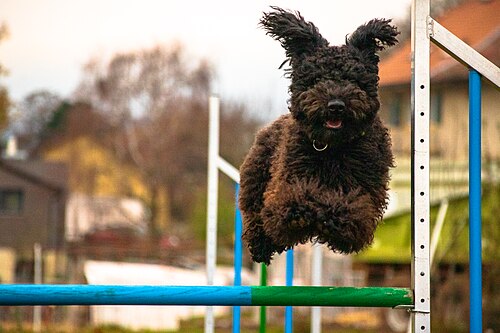
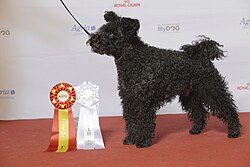
The Pumi's curly, medium-length coat barely mats and is relatively easy to care for; it is combed occasionally and trimmed every few months so that the typical shape is maintained. As an energetic, clever dog, the Pumi needs plenty of exercise every day and, above all, mental challenges to be balanced. He shines in practically all dog sports, from agility through obedience to treibball, and learns quickly and with enthusiasm. Since he is prone to barking, managing his vocalisations is part of training from the outset.
🩺 Health
The Pumi is considered a generally healthy breed with a life expectancy of around twelve to fourteen years. Occasionally patellar luxation (dislocation of the kneecap) and hip dysplasia occur, and more rarely hereditary eye diseases such as PRA or lens luxation. Reputable breeders have the parent animals examined for hip dysplasia and patella problems and use the available DNA tests. With enough exercise and good care, this lively Hungarian usually stays fit and sprightly into old age.
🏡 Who is this breed right for?
The Pumi is an excellent match for active, adventurous people and families who want a sporty, thinking dog and offer him plenty of occupation. Given enough activity, he is adaptable enough for an apartment, provided his barking is addressed early and consideration is shown for the neighbours. For open-minded beginners he is suitable thanks to his love of learning, as long as they are willing to invest in training and exercise. In Switzerland the weatherproof, lively Pumi is an ideal companion for dog sports, hikes and active families.