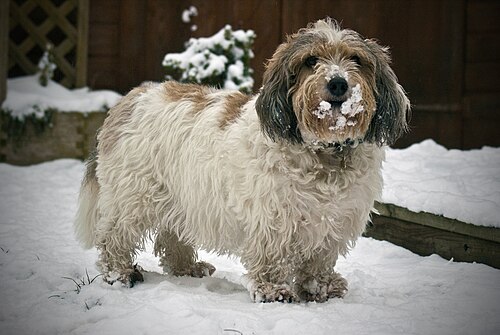
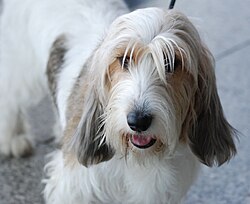
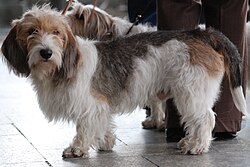
Petit Basset Griffon Vendéen
🧠 Temperament & character
The Petit Basset Griffon Vendéen is bright, extroverted and decidedly cheerful – a sociable dog who likes to be the centre of attention. He is brave, enduring and quite headstrong, as well as rather vocal when something interests him. He is loyally devoted to his family and loves the company of people and other dogs. His prey drive and his nose are strongly developed, so that on a scent he likes to act independently.
📜 Origin & history
The Petit Basset Griffon Vendéen comes from the coastal Vendée on the French Atlantic coast, where he hunted rabbits and small game in thorny, impassable terrain. His coarse coat protected him from undergrowth and weather. For a long time he formed a single breed with the larger Grand Basset Griffon Vendéen, until the two were finally separated in 1975; the FCI lists the PBGV under No. 67. Today he is a popular, lively companion dog in many countries.
✂️ Grooming, care & training
The Petit Basset Griffon Vendéen's coarse, medium-length coat needs regular brushing and occasional hand-trimming so that it stays scruffy and functional and does not mat. Despite his short legs he is astonishingly energetic and needs extensive daily walks as well as scent and search games. He is clever and learns quickly, but likes to get his own stubborn way, which is why consistent, motivating training is important. As a pack hound he tolerates company well and dislikes being alone for long.
🩺 Health
The Petit Basset Griffon Vendéen is considered a predominantly robust, long-lived breed with a life expectancy of around thirteen to fifteen years. Typical of the breed, eye diseases such as primary open-angle glaucoma and lens problems can occur, and occasionally epilepsy too; the long drop ears are prone to infections. Reputable breeders have the eyes of their breeding animals examined and choose temperamentally sound, healthy parent animals. Regular ear checks are part of basic care in this breed.
🏡 Who is this breed right for?
The Petit Basset Griffon Vendéen is a cheerful, adventurous family dog who suits active people with a sense of humour. He gets on well with children and other dogs and, thanks to his manageable size, is also suitable for an apartment – provided he gets enough exercise and occupation. For very quiet or inconsistent owners, his stubbornness and his fondness for barking are a challenge. Anyone looking for a lively, sociable companion who can live with a bit of barking will find an ideal partner in him.