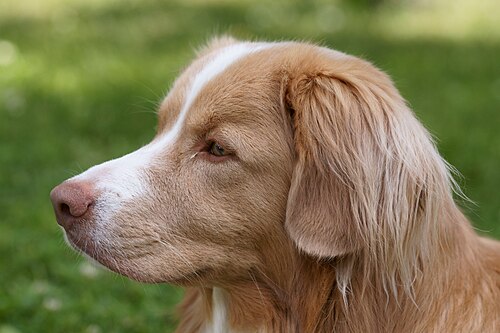
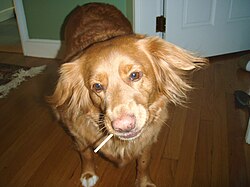
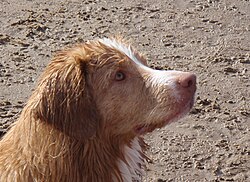
Nova Scotia Duck Tolling Retriever
🧠 Temperament & character
The Nova Scotia Duck Tolling Retriever is intelligent, playful and enduring, while being sensitive and strongly people-oriented. He is eager to work and keen to learn, but can be reserved towards strangers at first. Typical is the high, penetrating 'toller scream' out of excitement. He needs plenty of occupation and sensitive, motivating training in order to stay balanced.
📜 Origin & history
The Nova Scotia Duck Tolling Retriever was bred in the 19th century in the Canadian province of Nova Scotia, especially in Yarmouth County, for a special hunting technique. In 'tolling' the dog plays conspicuously at the shore, which lures curious ducks within shooting range, after which he retrieves them - a behaviour reminiscent of the fox. Various retrievers, spaniels and setters probably went into his breeding. Long known only regionally, he later developed into a valued sport and family dog.
✂️ Grooming, care & training
The medium-length, water-repellent coat of the Toller, with its dense undercoat, needs regular brushing and sheds noticeably, especially during the moult; the ears should be checked. As an active, work-loving retriever he has a high need for exercise and loves swimming, retrieving and dog sports. Just as important is mental stimulation, because he is clever and quickly bored. He is keen to learn but sensitive - motivating, fair training brings out his cooperation best.
🩺 Health
The Nova Scotia Duck Tolling Retriever usually reaches an age of around 12 to 14 years, but because of his relatively small gene pool he has some breed-typical burdens. Hereditary eye diseases such as PRA and CEA, hip dysplasia and autoimmune diseases, including steroid-responsive meningitis-arteritis (SRMA) and Addison's disease, can occur. Responsible breeders examine hips and eyes, use genetic tests and pay attention to familial autoimmune burdens.
🏡 Who is this breed right for?
The Nova Scotia Duck Tolling Retriever suits active, dog-experienced people and families who value an intelligent, sensitive dog with plenty of energy and a need for occupation. For sporty first-time owners he is manageable, provided they take his sensitivity and the 'toller scream' into account. Ideal is a home close to nature with access to water and plenty of shared activity. In Switzerland the compact, medium-sized retriever is gaining more and more followers as a sport and family dog.