Norfolk Terrier
🧠 Temperament & character
The Norfolk Terrier is fearless, sociable and extremely active, yet more good-natured and less quarrelsome than many other terriers. He is a cheerful, affectionate family dog who likes to be part of things and usually gets on well with other dogs – a pack dog in the best sense. His terrier heart, however, beats for the hunt: rats, mice and anything that scurries instantly awaken his prey drive. With his unshakeable cheerfulness and his self-assurance he is a charming, uncomplicated companion.
📜 Origin & history
The Norfolk Terrier comes from the East Anglia region of eastern England, where in the late 19th century he was bred as a small, agile stable and farm terrier for driving out rats and fox. Students in Cambridge made the robust little dogs popular. For a long time he formed a single breed with the Norwich Terrier; in 1964 the two were separated – the drop-eared variety became the Norfolk Terrier, the prick-eared one remained the Norwich Terrier.
✂️ Grooming, care & training
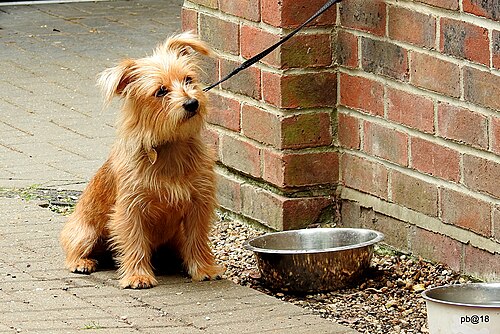
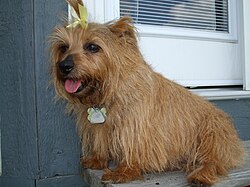
The Norfolk Terrier's wiry, weatherproof coat needs regular brushing and should be hand-stripped (plucked) two to three times a year – clipped, it loses its texture and natural protection. Despite his small size the Norfolk is a true terrier with a considerable need for exercise: daily walks, off-lead running and play keep him fit. Since he is clever and eager to learn, he enjoys search games, little tricks or dog sport. Consistent, friendly training and early socialisation make him a pleasant everyday companion.
🩺 Health
The Norfolk Terrier is a predominantly healthy, robust breed with a life expectancy of around 12 to 15 years. Breed-typical conditions include mitral valve disease (a heart condition in old age), patellar luxation (dislocation of the kneecap) and upper airway syndrome (UAS), which can impair breathing. Reputable breeders have the heart, knees and airways of their breeding animals examined. With good care and a healthy weight the Norfolk usually stays sprightly into old age.
🏡 Who is this breed right for?
The Norfolk Terrier is a versatile, adaptable companion who feels just as at home in an apartment as in the countryside – provided he gets daily exercise and activity. Thanks to his cheerful, good-natured character he is well suited to families with children and also to active seniors. Even for first-time owners he is a good choice with consistent training. In Switzerland he is a practical hiking and everyday companion who combines his handy size with a real terrier heart.