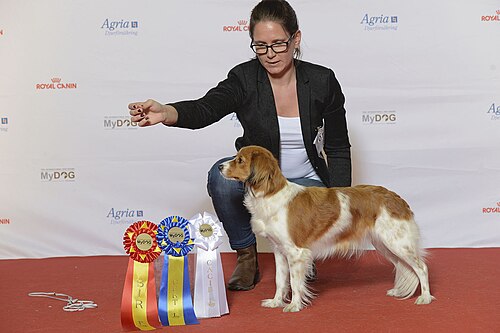
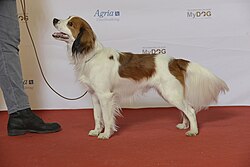
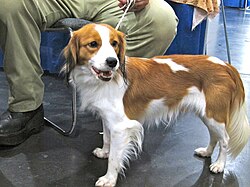
Nederlandse Kooikerhondje
🧠 Temperament & character
The Nederlandse Kooikerhondje is bright, friendly and sensitive, while also affectionate and willing to learn. Towards its family it is very devoted, while towards strangers it shows itself reserved at first and needs careful socialisation. It is sensitive and responds poorly to harshness or hectic – a calm, consistent hand does it good. Properly led, it is a cheerful, attentive and versatile companion.
📜 Origin & history
The Nederlandse Kooikerhondje served for centuries at the Dutch duck traps, the 'Kooien': with its striking tail it lured curious wild ducks into the funnel traps. It is frequently seen in old Dutch master paintings. After the decline of this trapping method the breed almost fell into oblivion and was only saved and rebuilt around the middle of the 20th century by Baroness van Hardenbroek van Ammerstol. Today it is a rare but valued companion and family dog.
✂️ Grooming, care & training
The Kooikerhondje's medium-length, slightly wavy coat with its feathering is relatively easy to care for and needs regular brushing; the ears should be checked. It has a medium to high need for exercise and enjoys walks, nose work, retrieving and dog sports such as agility or dummy training. As a clever, sensitive dog it needs just as much mental occupation. Friendly, sensitive training suits its nature best.
🩺 Health
The Nederlandse Kooikerhondje usually reaches an age of around 12 to 14 years, but because of its small gene pool it has several hereditary burdens. Von Willebrand disease (a blood-clotting disorder), hereditary necrotising myelopathy (ENM), patellar luxation and eye diseases can occur. Responsible breeders use the available genetic tests consistently and pay careful attention to genetic diversity.
🏡 Who is this breed right for?
The Nederlandse Kooikerhondje suits active, sensitive people and families with older children who value a sensitive, clever dog and can offer it calm, consistent leadership. For attentive first-time owners it is manageable, provided they respect its sensitivity. With sufficient occupation it can also live in an apartment. Because of its rarity and the health issues, choosing a reputable breeder who carries out tests is especially important.