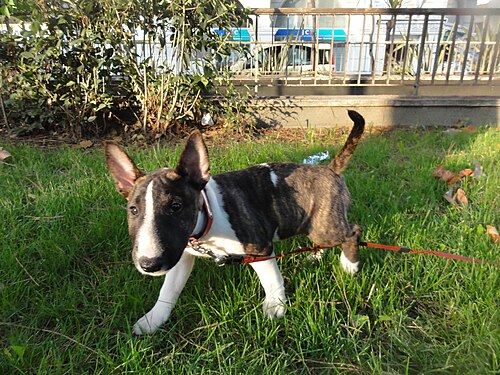
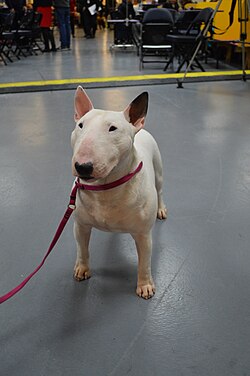
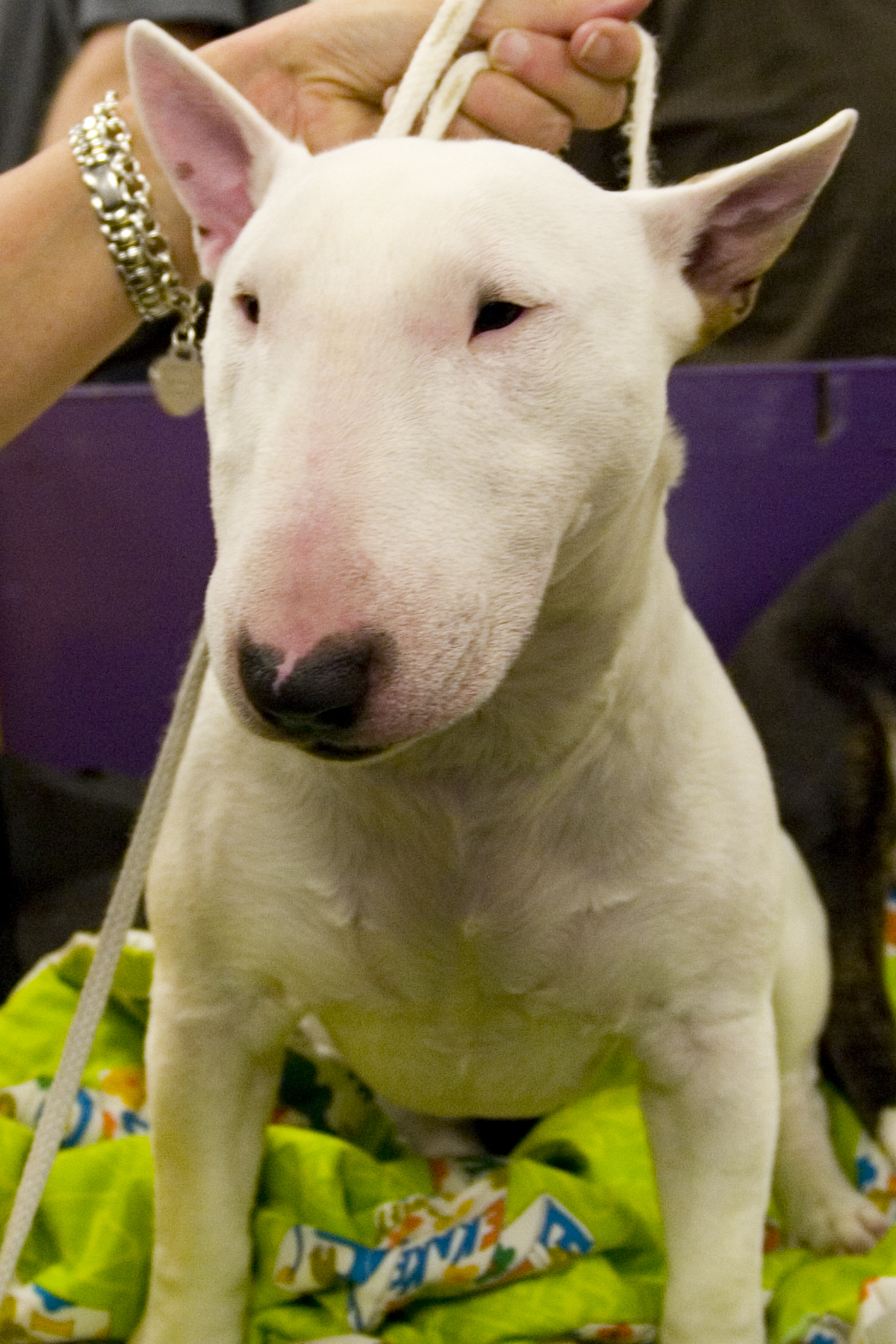
Miniature Bull Terrier
🧠 Temperament & character
The Miniature Bull Terrier is courageous, playful and full of exuberant zest for life - a real clown who makes his people laugh. At the same time he is headstrong and self-confident, with a pronounced prey drive and a good dose of stubbornness. He is very people-oriented and does not cope well with being left alone. With other dogs and small animals he is not always compatible, which is why early socialisation and loving but consistent training are decisive.
📜 Origin & history
The Miniature Bull Terrier shares its roots with the large Bull Terrier, which James Hinks formed in Birmingham in the mid-19th century from the bulldog and the now-extinct English White Terrier. Originally bred for dog fighting and rat hunting, the breed soon became the elegant companion of Victorian society. From the smallest representatives a separate miniature variety arose, which preserves all the peculiarities of its big brother - just in a more manageable format.
✂️ Grooming, care & training
The Miniature Bull Terrier's short, hard coat is uncomplicated and needs only occasional brushing; he sheds moderately. Considerably more attention is demanded by his need for activity: this powerful little dog needs plenty of daily exercise and, above all, mental occupation, otherwise he quickly becomes a creative troublemaker. Scent games, trick training and varied walks keep him content. In training, consistency paired with humour is called for - he is intelligent but stubborn, and responds only to fair, motivating training.
🩺 Health
With a life expectancy of around 11 to 14 years the Miniature Bull Terrier is considered fundamentally robust, but is known for a few hereditary diseases. Particularly important is primary lens luxation (PLL), a painful eye condition for which a DNA test exists. Congenital deafness (above all in pure-white dogs), heart and kidney disease can likewise occur. Reputable breeders consistently use DNA tests for PLL, BAER hearing tests and heart and kidney examinations.
🏡 Who is this breed right for?
The Miniature Bull Terrier suits active, humorous people who take pleasure in a wilful, powerful character dog and are prepared to work consistently on training. Thanks to his manageable size he also gets by in a flat, as long as he gets enough exercise and mental work. For inexperienced first-time owners he is only conditionally suitable because of his stubbornness and prey drive. With well-socialised children he gets along splendidly, but he should always be supervised on account of his strength and temperament.