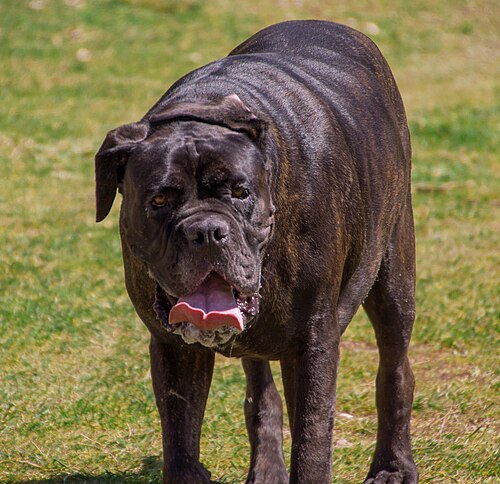
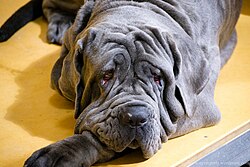
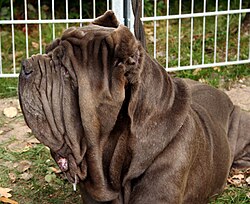
Neapolitan Mastiff
🧠 Temperament & character
The Neapolitan Mastiff is calm, loyal and deeply bonded with his family. As an imposing, territorial guardian he is suspicious and watchful towards strangers, without being needlessly aggressive. He is self-assured and independent and, in an emergency, likes to make his own decisions. This combination calls for early, thorough socialisation and calm, experienced leadership.
📜 Origin & history
The Neapolitan Mastiff comes from the region around Naples and traces back to ancient molossers of the kind already known as war and guard dogs in the Roman Empire. For centuries he served the farmers of southern Italy as a farm and guard dog. After the Second World War the breed was deliberately promoted and given a standard in 1949, which fixed its typical wrinkled appearance.
✂️ Grooming, care & training
The Neapolitan Mastiff's short coat is easy to care for, but the deep skin folds must be cleaned regularly and kept dry to prevent inflammation; he also drools heavily. His exercise needs are low to moderate: calm, regular walks are enough, while heat and heavy exertion should be avoided. Moderate growth is decisive so that the joints of this heavy dog mature healthily. The intelligent but wilful Mastino needs early socialisation and calm, consistent training.
🩺 Health
The Neapolitan Mastiff is heavily burdened in terms of health and, at around seven to nine years, has a short life expectancy. Because of the exaggerated skin folds he often suffers from skin-fold inflammation and eyelid defects such as cherry eye, entropion and ectropion; added to this are hip dysplasia, gastric torsion and heart disease. Responsible breeders aim for more moderate folds, healthy eyelids and joints, and carry out the relevant examinations. Those who love this breed should specifically seek out health-oriented lines with a less extreme expression.
🏡 Who is this breed right for?
The Neapolitan Mastiff belongs in the hands of experienced, calm owners with a house and a well-secured property who understand his protective instinct. He is not suitable for beginners, small apartments or restless households. Prospective owners should be aware of the health problems, the care of the skin folds, the drooling and, sadly, the short time together. In Switzerland, as a large guard and protection dog he may be subject to special keeping regulations depending on the canton - clarifying this early is advisable.