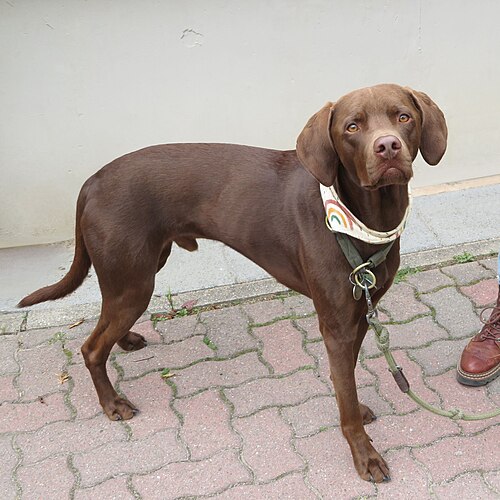
Hungarian Shorthaired Vizsla
🧠 Temperament & character
The Hungarian Shorthaired Vizsla is extremely people-oriented and seeks constant closeness - not for nothing is he lovingly called the 'velcro dog'. He is sensitive, intelligent and eager to learn, at the same time energetic and with a high need for exercise. He tolerates long periods alone poorly and then tends towards separation stress. With plenty of attention, occupation and sensitive leadership he shows himself to be a loyal, sensitive family dog.
📜 Origin & history
The Vizsla has accompanied the Hungarian Magyars for centuries and was long regarded as a hunting dog of the nobility and large landowners. His golden coat and his versatility made him a status symbol of the Puszta. After the two world wars the breed was on the brink of extinction and was preserved and rebuilt by a few enthusiasts. Today the Shorthaired Vizsla is popular worldwide as an elegant pointing and family dog.
✂️ Grooming, care & training
The Hungarian Shorthaired Vizsla's short, dense coat is remarkably easy to care for and needs only occasional brushing. All the more important is keeping him occupied: this dog needs a great deal of daily exercise and mental occupation, otherwise he becomes restless. Scent work, retrieving and dog sports challenge his alert mind. Since he is very sensitive, training succeeds best with patience, positive motivation and plenty of closeness.
🩺 Health
The Hungarian Shorthaired Vizsla is considered a generally robust breed with a life expectancy of around 12 to 14 years. Occasionally hip dysplasia, epilepsy or - as in several breeds - certain tumour diseases occur. Responsible breeders x-ray the hips and pay attention to healthy, long-lived lines. Regular checks of the ears and skin are sensible.
🏡 Who is this breed right for?
The Hungarian Shorthaired Vizsla suits active, present people and families who can spend plenty of time with their dog. For working people who would often have to leave him alone, or for quiet apartment households without exercise, he is unsuitable. In Switzerland he is an enthusiastic companion for jogging, hiking, cycling and dog sports. With children he usually gets along excellently, provided the whole family meets his need for closeness.