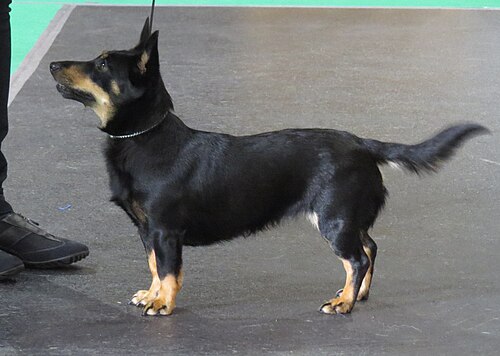
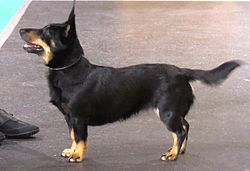
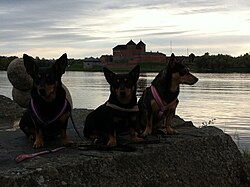
Lancashire Heeler
🧠 Temperament & character
Watchful, lively and intelligent, the Lancashire Heeler is an affectionate little dog with a good dose of self-confidence. He is very attached to his family, playful and eager to learn, but also shows a pronounced hunting and herding drive as well as a watchful tendency to bark. Towards strangers he is initially reserved, while with children and - given good socialisation - other dogs he usually gets along well. His sprightly, sometimes headstrong terrier-like temperament makes him an entertaining but decidedly demanding companion.
📜 Origin & history
The Lancashire Heeler originated in the English county of Lancashire, where it was kept as a versatile farm and droving dog. With well-aimed nips at the heels ('to heel') the low-set dog drove the cattle forward and ducked nimbly out of the way of kicks; on the side he was an eager ratter. These small working dogs probably arose from crosses of the Welsh Corgi and the Manchester Terrier. The breed became rare and today is regarded in Great Britain as a vulnerable native breed, but is slowly winning back friends.
✂️ Grooming, care & training
The Lancashire Heeler's short, dense coat is decidedly easy to care for; weekly brushing and the occasional bath are entirely sufficient. Despite his small size he is an active dog that needs daily exercise, play and mental occupation to stay balanced. His clever head and love of learning make him receptive to trick training, agility or scent games, though his stubbornness calls for patience. Early socialisation helps to channel his pronounced barking and hunting drive into orderly paths.
🩺 Health
In the Lancashire Heeler two hereditary eye conditions are significant: primary lens luxation (PLL), in which the lens of the eye shifts and can lead to painful glaucoma, and Collie Eye Anomaly (CEA). Reliable DNA tests exist for both, with which responsible breeders avoid mating affected animals. In addition, patellar luxation occurs occasionally. Overall the little Heeler is robust and long-lived and frequently reaches an age of twelve to fifteen years.
🏡 Who is this breed right for?
The Lancashire Heeler is a good fit for active individuals and families looking for a small but spirited dog and able to give him enough to do. Thanks to his size he is also suited to a flat, provided his need for exercise and occupation is met and his barking is addressed early on. For open-minded beginners he is quite suitable with a little consistency, but he should not be underestimated as a mere lapdog. In Switzerland he is an agile, weatherproof companion for walks, hikes and dog sport in miniature format.