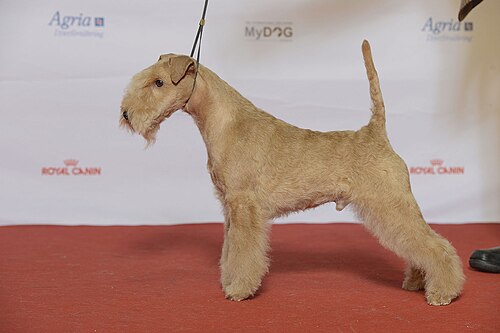
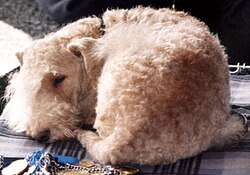
Lakeland Terrier
🧠 Temperament & character
The Lakeland Terrier is self-confident, brave, friendly and energetic, with the typical terrier urge to always have something to do. He is cheerful and affectionate towards his family, watchful towards the unfamiliar and has a pronounced hunting and digging drive. He is willing to learn and intelligent, but also independent and self-assured, which is why he needs clear, consistent leadership. With children he generally gets on well, but towards other dogs he can be forward and challenging.
📜 Origin & history
The Lakeland Terrier comes from the mountainous Lake District in north-west England and is one of the oldest English working terriers. Shepherds and farmers kept him to corner foxes that preyed on the sheep flocks in the fells - for this he had to be enduring enough to run long distances with the pack and brave enough to follow the fox into narrow rock crevices. From these tough fell terriers the breed developed, receiving its present name in 1921 and being officially recognised in 1928. Despite his long tradition he has remained a rather rare breed today.
✂️ Grooming, care & training
The dense, wiry outer coat of the Lakeland Terrier with its soft undercoat is weatherproof and must be brushed regularly and hand-stripped several times a year to preserve its texture and colour; he sheds only a little. He is an active, enduring dog that needs plenty of daily exercise, free running and mental occupation to be content. Without enough activity he tends to bark and dig, which is why search games, training and dog sports are ideal. As a clever but independent terrier, he benefits from consistent, motivating training and good socialisation.
🩺 Health
The Lakeland Terrier is a robust, healthy and long-lived breed with a life expectancy of about twelve to fifteen years. Primary lens luxation, an eye disease for which a DNA test is available, as well as Legg-Calvé-Perthes disease of the femoral head, can occur. Overall he is regarded as one of the healthier terrier breeds with few serious hereditary disorders. Responsible breeders use the DNA test for lens luxation, have the eyes examined and pay attention to healthy, sound-natured breeding animals.
🏡 Who is this breed right for?
The Lakeland Terrier suits active people and families well who are looking for a small, weatherproof and spirited companion and can offer him plenty of exercise and occupation. Thanks to his size he is suitable for both apartment and house, provided he is sufficiently occupied every day; a garden and access to nature suit him. For first-time owners he is manageable if they factor in the typical terrier character with its hunting drive, digging and love of barking. In Switzerland he is a rare but robust and cheerful choice for hikes, dog sports and active families.