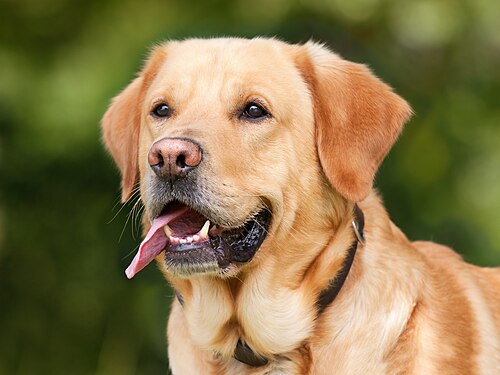
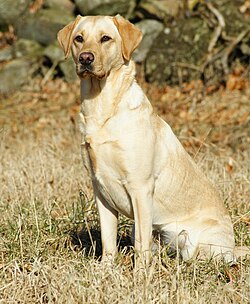
Labrador Retriever
🧠 Temperament & character
The Labrador is good-natured, people-oriented, keen to learn and patient – qualities that make it ideal for families and first-time owners. It is cheerful, compatible and rarely aggressive, and approaches people and dogs openly. It needs plenty of exercise and occupation, otherwise it can become unbalanced. Like the Golden, it is very greedy, which makes training easier but brings with it the danger of overweight.
📜 Origin & history
The Labrador comes, despite its name, not from Labrador but from the island of Newfoundland, where fishermen used the St. John's Dog to haul in nets and fish. In the 19th century such dogs came to England, where British nobles bred them further into reliable retrieving dogs for the hunt. From them the modern Labrador Retriever emerged, which was recognised as a breed in 1903. Its friendliness and versatility made it one of the most popular dogs of all worldwide.
✂️ Grooming, care & training
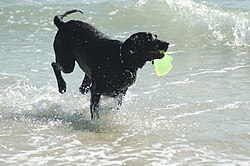
The Labrador's short, dense and water-repellent coat is easy to care for but sheds noticeably, especially during the moult; regular brushing keeps loose hair within limits. The drop ears should be checked and kept dry. As a work-loving retriever it needs plenty of daily exercise, swimming and retrieving games as well as mental activity. Thanks to its eagerness to learn and its food motivation it is excellent to guide through positive training and suitable for versatile dog sports.
🩺 Health
The Labrador usually reaches an age of around 10 to 12 years. Typical of the breed are hip and elbow dysplasia, a pronounced tendency to overweight, hereditary eye diseases such as PRA, as well as, in individual lines, exercise-induced collapse (EIC) and centronuclear myopathy (CNM). One should absolutely insist on health certificates of the parent animals – for example on hips, elbows, eyes and the available genetic tests.
🏡 Who is this breed right for?
The Labrador is the ideal family and beginner's dog: good-natured, patient, fond of children and versatile. It needs plenty of exercise, occupation and close family attachment and does not like to be alone for long. Given sufficient activity it can also live in an apartment, but ideal is an active home close to nature. As Switzerland's most popular breed it is widespread – which makes the choice of a reputable, health-oriented breeder all the more important.