Kuvasz
🧠 Temperament & character
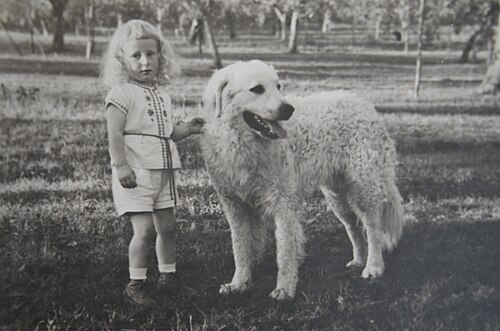
Self-assured, courageous and loyal, the Kuvasz is a watchful protector who seems calm and level-headed but acts decisively when danger threatens. With his family he is affectionate and gentle, yet naturally wary and reserved towards strangers. As an independently working livestock guardian he likes to make his own decisions, which calls for patience and composure in training. He is careful around his own family's children, but because of his protective instinct he should always be supervised.
📜 Origin & history
The Kuvasz is one of the oldest Hungarian dog breeds; his ancestors probably came to Hungary with nomadic peoples from Central Asia. In the Middle Ages the white guardians were highly prized and were even allowed to guard the royal hunts and courts under King Matthias Corvinus. Later the Kuvasz returned to his original role as a livestock-guarding dog, protecting cattle against wolves and thieves. Nearly extinct after the World Wars, the breed was painstakingly rebuilt from the few remaining animals.
✂️ Grooming, care & training
The Kuvasz's dense, slightly wavy white double coat is surprisingly easy to care for and dirt-repellent; regular brushing is enough, daily during heavy shedding. As a calm but powerful dog he needs sufficient exercise in the form of long walks, but no intensive sport programme. More important is a meaningful task and mental occupation that suits his guardian nature. In training, early socialisation, patience and loving consistency are crucial, as the Kuvasz thinks independently and rejects coercion.
🩺 Health
As a large, fast-growing breed the Kuvasz is prone to hip and elbow dysplasia as well as osteochondrosis, a developmental disorder of the joint cartilage. Moderate growth during development with adapted feeding and gentle exercise is therefore especially important. Reputable breeders X-ray the parent animals for joint dysplasia and pay attention to healthy breeding lines. Life expectancy is around ten to twelve years; as with many large breeds, the risk of gastric torsion should also be kept in mind.
🏡 Who is this breed right for?
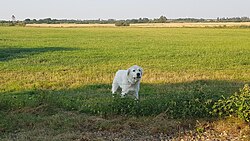
The Kuvasz is a dog for experienced owners with space, ideally a house with a well-secured garden or an estate he is allowed to guard. He is not suited to an apartment, to insecure beginners or to a hectic environment. He needs people who understand his pronounced protective instinct, socialise him early and thoroughly, and offer him calm leadership. In Switzerland you should check the cantonal regulations for large guardian dogs before acquiring one and be aware that his guarding behaviour can present challenges in densely populated areas.