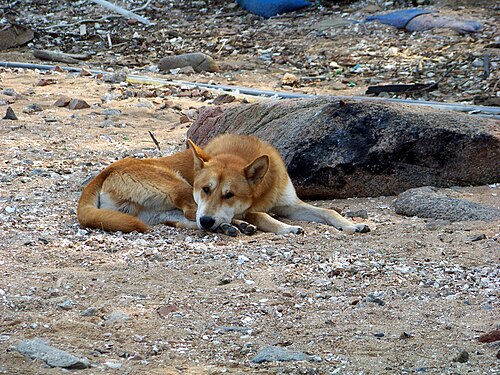
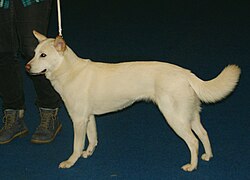
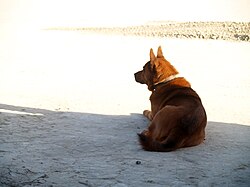
Korea Jindo Dog
🧠 Temperament & character
The Korea Jindo Dog is courageous, loyal and strongly bonded to one person, while being watchful and extremely independent. He is famous for his legendary sense of direction and his deep bond, yet remains reserved with strangers. His pronounced hunting drive and his self-assurance call for clear, respectful leadership. He is clean, often almost cat-like, and is barely inclined to bark without reason.
📜 Origin & history
The Korea Jindo Dog comes from the island of Jindo in south-western Korea, where for centuries he remained largely isolated and pure. Traditionally he served as a hunting dog for game of all sizes as well as a watchful farm dog. Numerous stories about Jindos returning to their owners established his reputation as the embodiment of loyalty. In 1962 he was declared a natural monument in South Korea and is today regarded as a national pride.
✂️ Grooming, care & training
The Korea Jindo Dog's dense, harsh double coat is weatherproof and easy to care for, but sheds heavily during the moult and then needs frequent brushing. As an original hunting dog he needs plenty of exercise and mental stimulation to be content. He is intelligent and capable of learning, but independent, which is why consistent, fair training and early socialisation are decisive. Because of his hunting drive a securely fenced area is advisable; he is also a well-known escape artist.
🩺 Health
The Korea Jindo Dog is a robust natural breed with a life expectancy of around 12 to 15 years. Occasionally an underactive thyroid (hypothyroidism) occurs; otherwise he is little prone to breed-typical hereditary diseases. Responsible breeders pay attention to thyroid, hip and eye health. On the whole he is regarded as a very healthy, long-lived dog.
🏡 Who is this breed right for?
The Korea Jindo Dog suits experienced, active people who understand his loyalty, his independence and his hunting drive. He is less suited to beginners, nor to being kept purely in an apartment without room to run. Ideal is a house with a well-secured garden, since he likes to slip away and cover long distances. In Switzerland he is rare; for connoisseurs he is an exceptionally loyal companion.