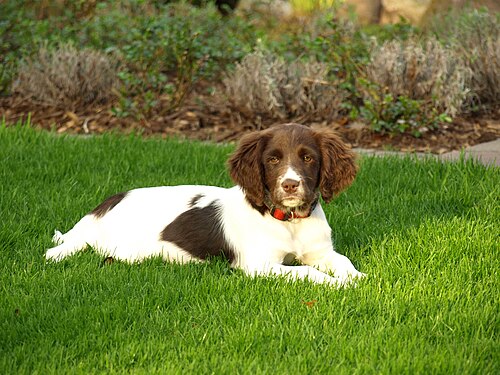
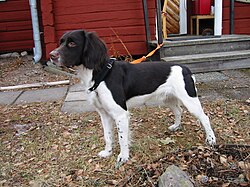
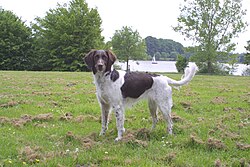
Small Münsterländer
🧠 Temperament & character
The Small Münsterländer is lively, intelligent and closely bonded to its family – it needs plenty of closeness and suffers from being left alone for long periods. It is eager to work, keen to learn and tireless, but shows itself pleasantly balanced at home when it is kept busy. Towards strangers it is usually friendly, and compatible with children and other dogs. Without sufficient activity, however, the clever dog can quickly get up to mischief.
📜 Origin & history
The Small Münsterländer comes, like its larger namesake, from the Münsterland, but developed as an independent, smaller breed. Rural hunters have always valued agile, versatile pointing dogs that also mastered retrieving and work after the shot. In the early 20th century the remaining animals were deliberately brought together and the breed re-established. Today the Small Münsterländer is one of the most popular pointing dogs in the German-speaking world.
✂️ Grooming, care & training
The Small Münsterländer's medium-length, dense coat is weatherproof and needs regular brushing, especially on the feathered parts. As a full working dog it needs plenty of daily exercise as well as demanding mental work such as nose, retrieving or tracking work. It learns quickly, enjoys working together with its person and positively blossoms with meaningful tasks. Consistent, fair guidance and a close bond are especially important with this breed.
🩺 Health
The Small Münsterländer is considered a generally robust and long-lived breed with a life expectancy of around 13 to 14 years. Hip dysplasia occasionally occurs, but otherwise it is largely spared serious hereditary diseases. Reputable breeders x-ray the hips and value healthy, steady and eager-to-work lines. Because of the drop ears, regular ear checks are advisable.
🏡 Who is this breed right for?
The Small Münsterländer suits active people and families who can offer it plenty of exercise, activity and close companionship. It is not suitable for pure apartment keeping, less active owners or frequent time alone. In Switzerland it is an ideal companion for hunting, hikes, dummy training and water games. It usually gets on excellently with children and, as a compact hunting dog, fits well into family life.