Karst Shepherd Dog (Kraški Ovčar)
🧠 Temperament & character
The Karst Shepherd Dog is a loyal, courageous and watchful livestock-guarding dog. He is deeply devoted and attached to his family, while towards strangers he is watchful, suspicious and reserved. He is self-assured and makes independent decisions, yet remains balanced and not aggressive without reason. This combination calls for early socialisation and calm, consistent leadership.
📜 Origin & history
The Karst Shepherd Dog comes from the Karst region (Kras) in south-western Slovenia, where he traditionally protected flocks of sheep from wolves and bears. He is one of the oldest herding dogs of the Balkans and was first described in 1939, initially together with the Šarplaninac, until the two were recognised as separate breeds. To this day he is closely tied to Slovenia's pastoral tradition and rare outside his homeland.
✂️ Grooming, care & training
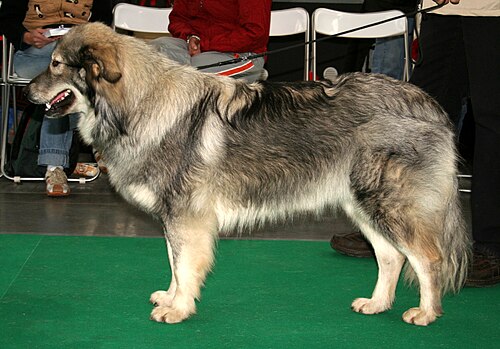
The Karst Shepherd Dog's dense, iron-grey coat with its good undercoat needs regular brushing and sheds heavily during the moult. His exercise needs are moderate to high: he loves room to run outdoors and a task, but is not a restless sporting dog. As an independently thinking guardian he needs patient, consistent training and early, positive contact with people and animals. Force and harshness are out of place with this proud breed.
🩺 Health
The Karst Shepherd Dog is an overall robust, original breed with a life expectancy of around eleven to twelve years. As with many medium to large dogs, hip dysplasia is the most likely condition. Responsible breeders x-ray the hips of the parent animals and pay attention to temperamental soundness and a healthy musculoskeletal system. Thanks to the still original breeding oriented towards working use, the breed is comparatively healthy.
🏡 Who is this breed right for?
The Karst Shepherd Dog suits experienced owners with a house and a well-secured plot who understand and value his protective drive and independence. He is less suited to the city apartment or inexperienced first-time owners. He feels most at ease with a task, plenty of room and close family contact, ideally in the countryside. Anyone who offers him leadership, early socialisation and activity gains a loyal, watchful and impressive companion.