Canadian Eskimo Dog
🧠 Temperament & character
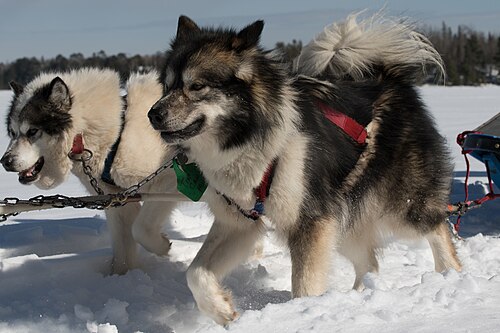
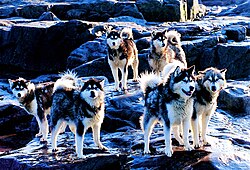
The Canadian Eskimo Dog is powerful, enduring, loyal and alert, with pronounced pack behaviour and great eagerness to work. It has a strong hunting instinct and an intense temperament that demands physical exertion. It bonds with its people but remains an independent, original dog, not a comfortable companion. Within a group, distinct hierarchies can emerge, which is why experienced leadership is necessary.
📜 Origin & history
The Canadian Eskimo Dog has accompanied the Inuit and their ancestors through the Canadian Arctic for over a thousand years. It pulled heavy sleds and helped in the hunt for seals, musk oxen and even polar bears. With the spread of the snowmobile, the population collapsed dramatically in the 20th century, so that the breed almost disappeared. Targeted conservation breeding narrowly saved it from extinction.
✂️ Grooming, care & training
The Canadian Eskimo Dog's dense, double-layered coat is made for Arctic cold and requires intensive brushing, especially during the moult. It is an endurance athlete and needs a great deal of exercise, ideally draught work or long runs; mere walks are not enough for it. It is intelligent but headstrong, and needs an experienced, consistent hand as well as early socialisation. In warm weather, care must be taken to avoid overheating.
🩺 Health
The Canadian Eskimo Dog is a robust, original breed with a life expectancy of around 10 to 13 years. Hip dysplasia as well as a sensitive stomach can occur; its Arctic metabolism is moreover adapted to a high-fat diet. Reputable conservation breeders X-ray the hips and pay attention to genetic diversity, since the population is small. Overall it is considered tough and little prone to the diseases of civilisation.
🏡 Who is this breed right for?
The Canadian Eskimo Dog is not a family or beginner's dog, but a demanding working dog for very experienced, active people. It needs a cool climate, plenty of space and a real task – apartment living is unsuitable for it. Ideal are owners in draught-dog sports or in snowy regions with time and fitness. In Switzerland it is extremely rare and can only be recommended for connoisseurs with a suitable environment.