Japanese Spitz
🧠 Temperament & character
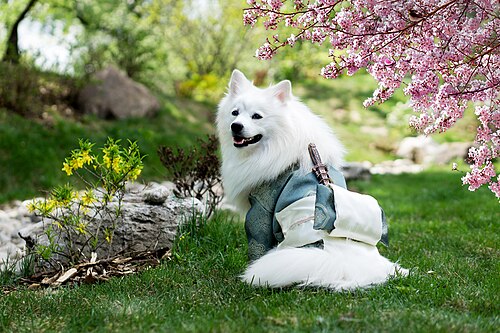
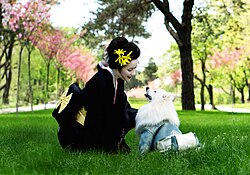
The Japanese Spitz is lively, intelligent, affectionate and cheerful, and very focused on his people. He is attentive and announces visitors, but with good training he does not tend towards constant yapping. He usually gets on excellently with children and other dogs and is a sociable, cuddly family dog. His self-confident yet friendly nature makes him a pleasant everyday companion.
📜 Origin & history
The Japanese Spitz was bred in Japan in the 1920s and 1930s from various white spitz breeds, with the Giant German Spitz playing an important role. The aim was a compact, pure white companion dog with a friendly nature. After the Second World War he grew in popularity in Japan and later worldwide. Today he is valued above all as a charming family and companion dog.
✂️ Grooming, care & training
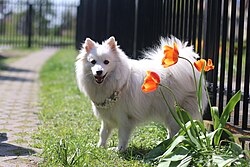
Despite his lush, pure white coat, the Japanese Spitz is astonishingly easy to care for: the hair has a dirt-repellent structure, so that regular brushing usually suffices. During the moult he sheds more heavily and then needs more frequent brushing. He is fond of movement, but no extreme athlete – daily walks and play are enough. As a clever, willing dog he learns quickly and is well suited to tricks and dog sports.
🩺 Health
The Japanese Spitz is mostly healthy and long-lived, with a life expectancy of around 12 to 16 years. Patellar luxation (dislocation of the kneecap) as well as tear-related discolouration in the corner of the eye can occur. Reputable breeders pay attention to healthy knee joints and good eye health. On the whole he is considered a robust breed with few serious hereditary problems.
🏡 Who is this breed right for?
The Japanese Spitz is an ideal family dog and, thanks to his size and adaptability, is also well suited to flats and to beginners. He is very people-oriented and should not be left alone for long, as he needs the closeness of his family. He fits city and country equally, as long as he gets daily exercise and attention. In Switzerland he is a popular, uncomplicated companion for many situations in life.