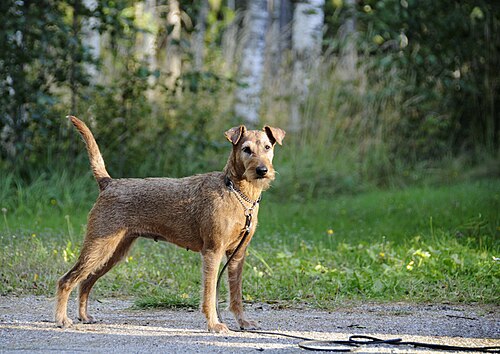
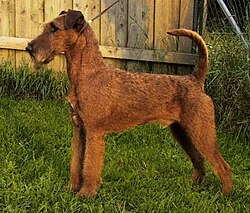
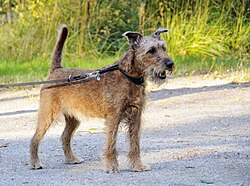
Irish Terrier
🧠 Temperament & character
The Irish Terrier is courageous, spirited and loyal, with a fiery terrier heart and plenty of character. Towards his family he is decidedly affectionate and gentle, often patient and loving with children, but towards other dogs – especially those of the same sex – he can be dominant and pugnacious. He is watchful and a reliable warner, intelligent and trainable, yet also wilful. He needs clear leadership, consistent training and plenty of activity to be balanced.
📜 Origin & history
The Irish Terrier is one of Ireland's oldest terrier breeds and was kept as a versatile farm and hunting dog that fought rats and vermin, guarded the property and even retrieved as a water dog. Together with the Kerry Blue and the Wheaten Terrier he is one of the native Irish terriers, and in 1879 he was firmly defined with one of the first breed standards. He became famous in the First World War, where Irish Terriers served as brave messenger dogs in the trenches and were praised for their reliability and fearlessness. His fiery character and brilliant red colour made him a symbol of Irish pride.
✂️ Grooming, care & training
The Irish Terrier's dense, wiry coat is weatherproof and easy to care for; regular brushing and hand-stripping two or three times a year keep it in shape and preserve its brilliant colour. He is a very active, enduring dog that needs plenty of daily exercise, free running and mental challenges. Without sufficient activity his temperament can lead to problems, which is why dog sports, tracking or long hikes are ideal. As a clever but wilful terrier he needs consistent, fair training and good guidance in dealing with other dogs.
🩺 Health
The Irish Terrier is considered a robust and long-lived breed with a life expectancy of about thirteen to fifteen years. Described as typical of the breed are hyperkeratosis of the footpads (excessive keratinisation, for which a DNA test is available) and cystinuria, a metabolic disorder that can lead to urinary stones. Both conditions are well manageable with responsible breeding through genetic tests or checks. Reputable breeders test their breeding animals accordingly and pay attention to healthy, temperamentally stable lines.
🏡 Who is this breed right for?
The Irish Terrier suits active, dog-experienced people and families best who can offer him clear leadership, plenty of exercise and mental activity. For families with children he is well suited as an affectionate, courageous companion, but his possible intolerance of other dogs should be taken seriously. He can live in a flat if he is kept thoroughly occupied, but he feels especially at ease with a garden and access to nature. In Switzerland he is a spirited, faithful partner for sporty owners, but rather demanding for outright beginners.