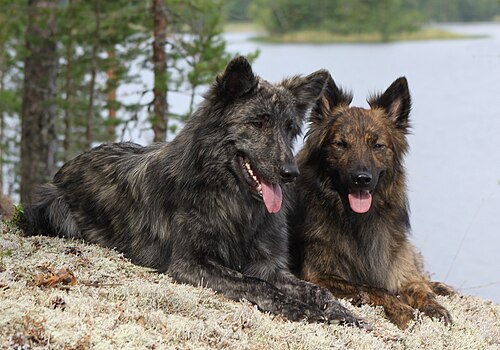
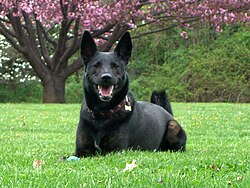
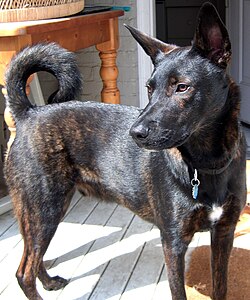
Dutch Shepherd
🧠 Temperament & character
Attentive, loyal and endowed with an enormous will to work, the Dutch Shepherd is an even-tempered and eager-to-learn dog that loves clear tasks. He bonds closely with his family, is considerate with children and, when well socialised, usually gets on well with other dogs. His watchdog instinct is pronounced without him becoming a yapper - towards strangers he remains reserved at first. This high intelligence wants to be occupied: when under-challenged, the Hollandse Herder quickly finds his own, less desirable tasks.
📜 Origin & history
The Dutch Shepherd emerged in the 19th century in the rural regions of the Netherlands, where he worked as an undemanding jack-of-all-trades on farms and fields. He drove sheep, kept herds away from the fields, guarded the farmstead and even pulled carts. When classic herding work declined, the breed was preserved thanks to its versatility as a service dog with the police and military. His striking brindle coat distinguishes him to this day from his close relatives, the Belgian and the German Shepherd.
✂️ Grooming, care & training
The breed comes in three coat types - short-, long- and wire-haired - with the short-haired variety getting by with occasional brushing; the wire coat needs more care and occasional stripping. More important than coat care is proper exercise: the Dutch Shepherd needs extensive daily activity and above all mental challenges. Dog sports such as tracking, obedience, agility or mantrailing make him happy and balanced. Thanks to his eagerness to learn and his biddability he is excellent to train - consistently, but fairly and with positive reinforcement.
🩺 Health
The Dutch Shepherd is considered one of the healthiest herding breeds and only rarely suffers from hereditary diseases. Occasionally hip dysplasia occurs, and in the wire-haired line a hereditary muscle disease (inflammatory myopathy) as well as goniodysplasia, a risk factor for glaucoma, are known. Responsible breeders X-ray the parent animals for hip and elbow dysplasia and pay attention to a broad genetic base. With good care the robust breed reaches an age of around twelve to fourteen years.
🏡 Who is this breed right for?
The Dutch Shepherd is best suited to active people and families who challenge him mentally and physically and let him take a close part in family life. For keeping in an apartment without a task he is little suited; a house with a garden and regular dog sport are ideal. For beginners he is only recommended with reservations - but anyone willing to engage with training and occupation will be rewarded with a highly talented partner. In Switzerland, thanks to his steady nerves and weather resistance, he is a popular companion for hikes, sport and service work.