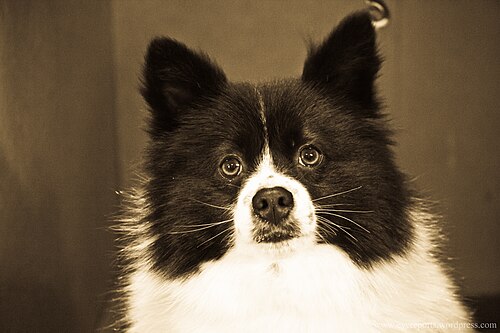
Giant German Spitz
🧠 Temperament & character
The Giant German Spitz is attentive, lively and remarkably loyal, at the same time watchful and reserved towards strangers. He bonds closely with his family, reliably gives the alarm and is considered an attentive but not aggressive guardian. Unlike many spitz dogs he has practically no hunting instinct, which makes living together considerably easier. He is teachable and wants to please, but can show a certain readiness to bark.
📜 Origin & history
The Giant German Spitz belongs to the old family of German Spitz dogs, which are among the oldest dog breeds of Central Europe and are said to descend from the peat-bog dogs of the Stone Age. For centuries he guarded farms, vineyards and wagons without hunting game - a reliable alarm-giver with a loud voice. In the 20th century he became rare; today enthusiasts work to preserve this traditional variety.
✂️ Grooming, care & training
The Giant German Spitz's luxuriant, standing-off double coat with its characteristic ruff needs regular brushing, but mats surprisingly little. He is content with moderate exercise but is pleased by walks and occupation. As a clever, people-oriented dog he is easy to train, whereby the tendency to bark should be worked on early. His coat is easier to care for than it looks and must never be clipped.
🩺 Health
The Giant German Spitz is a remarkably robust and long-lived breed that often reaches 13 to 16 years of age. Thanks to a comparatively broad gene pool and little over-typing, he is considered healthy and free of many typical breed problems. Reputable breeders nonetheless pay attention to patella and eye health as well as a balanced temperament. Regular dental care is advisable, as with many spitz dogs.
🏡 Who is this breed right for?
The Giant German Spitz is an adaptable family and guard dog that is also suitable for quieter households and seniors. Since he has no hunting instinct and is teachable, beginners also get along well with him. He likes to live in a house or apartment as long as he may be close to his people; his watchfulness and tendency to bark should be considered with regard to the neighbourhood. In Switzerland he is a rare but rewarding choice for people who seek a loyal guardian without great pressure to keep him occupied.