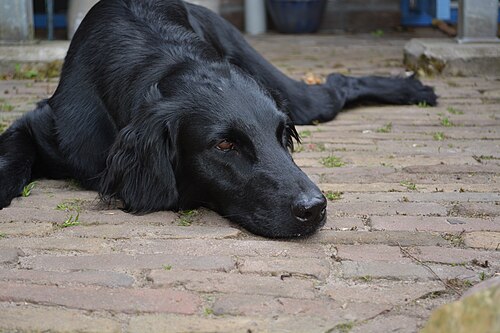
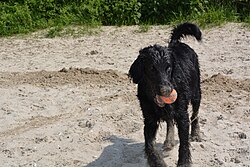
Flat Coated Retriever
🧠 Temperament & character
The Flat Coated Retriever is cheerful, friendly and forever youthful – his exuberant joy of life is infectious. He is very people-oriented, easily enthused and loves to be involved and to please. Aggression is alien to him; he usually meets people and dogs openly and good-naturedly. His enduring puppyishness, however, calls for plenty of patience and a loving yet consistent upbringing.
📜 Origin & history
The Flat Coated Retriever emerged in the mid-19th century in England from crossings of Newfoundland-type dogs, Setter and Collie blood as well as early retrievers. For a long time he was the most popular retrieving dog of British hunters before the Labrador and Golden Retriever displaced him in the 20th century. After the world wars he was on the brink of disappearing but could be preserved by committed breeders. Today he is a valued but comparatively rare hunting and family dog.
✂️ Grooming, care & training
The smooth, medium-length coat of the Flat Coated Retriever with its feathering is uncomplicated and needs regular brushing as well as checking of the drop ears. As a work-loving retriever he has a high need for exercise and loves swimming, retrieving and shared activities. Just as important is mental activity, because he is clever and eager to learn. Because of his long 'young dog phase' he needs particularly much patience and positive motivation in training.
🩺 Health
The Flat Coated Retriever unfortunately has one of the highest cancer rates among all dog breeds – above all histiocytic sarcoma and other malignant tumours occur with above-average frequency and lead to a short average life expectancy of often only 8 to 10 years. In addition, hip dysplasia, patellar luxation and eye diseases can occur. Reputable breeders work with health data and longevity lines, but the cancer risk cannot currently be ruled out – honest information from the breeder is crucial.
🏡 Who is this breed right for?
The cheerful, good-natured Flat Coated Retriever is a wonderful family dog for active people who accompany his exuberant energy and long young-dog phase with humour and patience. He is fond of children and usually compatible, but needs plenty of exercise, occupation and close family contact. For sporty first-time owners he is manageable. Anyone deciding on this breed should be aware of the increased cancer risk and factor it in both emotionally and financially.