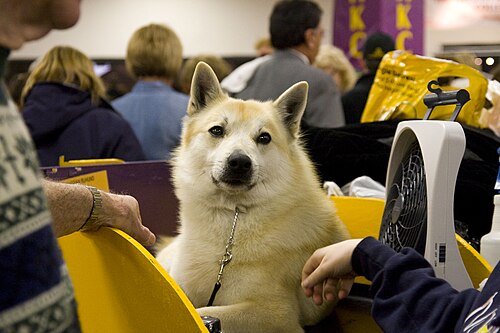
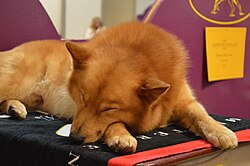
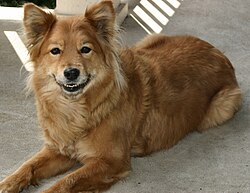
Finnish Spitz
🧠 Temperament & character
The Finnish Spitz is lively, brave and exceptionally attentive, while being warmly devoted to his people. He is considered very fond of barking – that lies in his nature as a 'barking bird dog' – and brings an independent, self-assured mind. He usually gets on well with children and is a cheerful family dog, but towards strangers he remains rather reserved at first. His independence calls for consistent but friendly guidance.
📜 Origin & history
The Finnish Spitz comes from the forests of Finland, where he has been used for centuries as a hunting dog for feathered game. His speciality is 'barking up' capercaillie and other birds: he locates the game, holds it in the tree with rhythmic barking and thus shows the hunter the way. In 1979 he was officially declared the national dog of Finland, and to this day competitions are held there for the 'King of the Barkers'.
✂️ Grooming, care & training
The fox-red double coat of the Finnish Spitz is easy to care for and needs only regular brushing, somewhat more often during the twice-yearly moult. As an original hunting dog he needs plenty of exercise and mental occupation, otherwise he finds his own tasks. He learns quickly but likes to think for himself, which is why varied, motivating training works best. Important: his pronounced barking and hunting drive should be channelled early into orderly paths.
🩺 Health
The Finnish Spitz is considered a robust, long-lived breed and often reaches 12 to 15 years. Breed-typical hereditary diseases are rare; occasionally epilepsy or a patellar luxation (dislocation of the kneecap) occurs. Reputable breeders pay attention to healthy breeding lines and have the parent animals examined accordingly. A healthy weight and sufficient exercise contribute a great deal to a long dog's life.
🏡 Who is this breed right for?
The Finnish Spitz is a good fit for active people and families who enjoy a lively, communicative dog. For an apartment he is only conditionally suitable because of his fondness for barking – a house with a garden in a rural setting suits him better. Beginners should be aware of his independence and his hunting drive and be prepared to train consistently. In Switzerland he is rare, but for nature lovers with time for exercise he is an appealing companion.