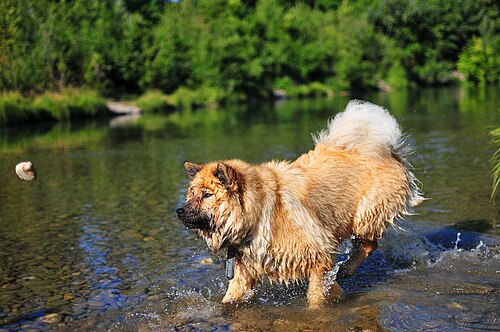
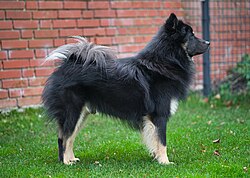
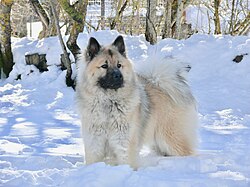
Eurasier
🧠 Temperament & character
The Eurasier is balanced, calm and strongly family-oriented - a gentle, attentive companion with a stable nature. To his family he is deeply attached and seeks close contact; towards strangers he remains reserved, but neither shy nor aggressive. He is watchful, but not a yapper, and shows a pleasant, unobtrusive self-confidence. His sensitive temperament needs loving, calm leadership and lots of closeness: this dog by no means belongs in a kennel or left alone, for he lives for the community with his people.
📜 Origin & history
The Eurasier is a comparatively young breed, created in the 1960s in Germany by Julius Wipfel and fellow enthusiasts. The aim was a balanced family dog that would unite the fine qualities of various Nordic breeds. First the Wolfspitz and Chow Chow were crossed into the 'Wolf-Chow', later the Samoyed was crossed in - from this the Eurasier emerged. As early as 1973 the breed was recognised by the FCI. From the outset the focus was not on working performance but on the character as a gentle, family-oriented companion dog.
✂️ Grooming, care & training
The Eurasier carries a dense, medium-length double coat that needs regular brushing - about once or twice a week - and sheds considerably more heavily during the moult. Pleasingly, his coat is considered low-odour and little prone to matting. His need for exercise is moderate: extended walks and quieter occupation are enough for him, extreme dog sport is not necessary. In training, sensitivity is called for, for the sensitive Eurasier reacts sensitively to harshness or injustice; with calm, patience and loving consistency, on the other hand, he learns reliably and gladly.
🩺 Health
The Eurasier is considered a largely healthy breed with a life expectancy of around 12 to 14 years. Hip dysplasia, patellar luxation (dislocation of the kneecap) and occasionally eye diseases and hypothyroidism can occur. Since the breed arose from few founder animals, responsible breeders place particular value on a broad gene pool and comprehensive health examinations of hips, knees, eyes and thyroid. With careful breeding selection the Eurasier is a robust, long-lived companion.
🏡 Who is this breed right for?
The Eurasier is one of the ideal family dogs: balanced, gentle and adaptable, he is suitable both for families with children and for calmer individuals and couples. Thanks to his moderate need for exercise and his uncomplicated nature, he is also well suited to sensitive first-time owners and can live in a larger apartment given enough exercise. Crucial is that he be closely integrated into the family - he cannot tolerate isolation or kennel keeping. In Switzerland he is a popular, sound companion for a harmonious family life.