Estonian Hound
🧠 Temperament & character
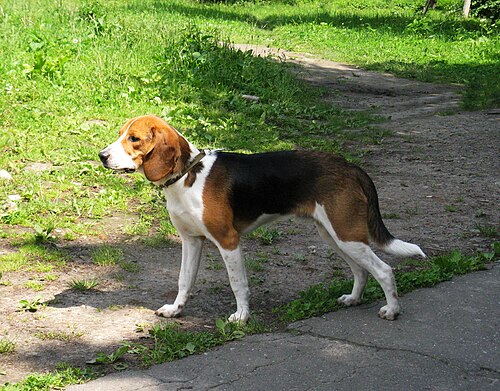
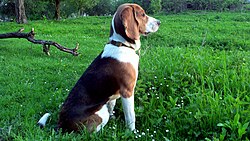
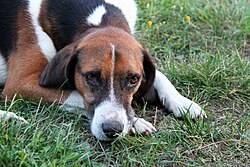
The Estonian Hound is friendly, balanced and lively - a sociable scent hound with a good-natured, easy-going character. He has a good nose and a sonorous voice that he uses on the trail, and works with stamina and reliability. With children and other dogs he generally gets on well and shows himself to be an affectionate, social companion. His hunting drive, however, remains clearly present, which is why he needs plenty of exercise and nose work.
📜 Origin & history
The Estonian Hound emerged in the 20th century, when a regulation in the then Soviet era limited the size of hunting dogs in order to spare deer and fawns. By crossing various scent hounds, including some Beagle influence, a compact, short-legged tracker for hunting hare and fox was created. In 1959 the breed was officially established and later declared the national dog of Estonia. To this day it is found mainly in its homeland and is rare elsewhere.
✂️ Grooming, care & training
The short, dense coat of the Estonian Hound is weatherproof and very easy to care for; occasional brushing is enough. He needs regular, ample exercise and plenty of nose work to be physically and mentally occupied. Without enough occupation this active scent hound becomes restless. In training he is comparatively pleasant thanks to his friendly, balanced nature, but follows his nose; the long ears should be checked regularly and kept clean.
🩺 Health
The Estonian Hound is regarded as a robust, healthy hunting breed with a life expectancy of about twelve to fourteen years. Breed-typical hereditary diseases are rare, which is thanks to functional breeding for hunting performance. As with all drop-eared hounds, one should above all watch the ears and check them regularly for infections; the weight and joints of active hunters also deserve attention. Responsible breeders value health, temperament and working suitability.
🏡 Who is this breed right for?
The Estonian Hound suits active people and families who value a compact, friendly hunting dog with a balanced nature and can offer him enough exercise and nose work. Thanks to his size and his social character he also copes with a smaller home, provided he is kept occupied. For very comfort-loving owners he is less ideal because of his hunting drive. In Switzerland he is a real rarity and encountered almost only in hunting circles; outdoors, because of his tracking drive, keeping him secure and observing leash rules are important.