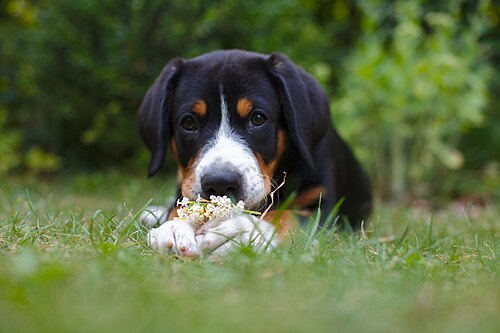
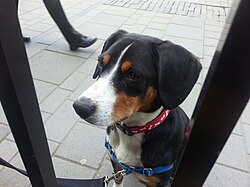
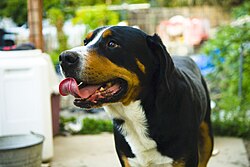
Entlebucher Mountain Dog
🧠 Temperament & character
The Entlebucher is very lively, spirited and exceptionally attached to his family. As a former droving dog he is agile, enduring and watchful, and needs plenty of both physical and mental activity. He gets on well with children but may show his old droving instinct and tend to nip. Towards strangers he is at first reserved and gives reliable warning, which makes him an attentive guardian.
📜 Origin & history
The Entlebucher Mountain Dog comes from the Entlebuch in the canton of Lucerne and was traditionally used for driving and guarding cattle in the Alps. For a long time he was regarded as a variety of the Appenzeller, until he was recognised as an independent breed in 1926. From the robust farm and droving dog has today emerged a versatile sport, rescue and family dog.
✂️ Grooming, care & training
The Entlebucher's short, dense double coat is easy to care for and needs only occasional brushing. The key factor is keeping him occupied: this active dog wants plenty of daily exercise and mental challenge, for instance through dog sports, tracking or trick work. The intelligent and eager-to-learn Entlebucher is easy to train, but needs consistent, varied guidance. Under-challenging him quickly leads to restlessness and wilfulness.
🩺 Health
The Entlebucher Mountain Dog is quite robust, with a life expectancy of around twelve to fourteen years, but because of the small gene pool he has some breed-typical problems. These include hip dysplasia and hereditary eye diseases (such as cataract and progressive retinal atrophy). Moreover, the natural bobtail typical of the breed must not be mated with a second bobtailed dog, as a lethal factor is at work here. Responsible breeders examine hips and eyes and plan matings carefully.
🏡 Who is this breed right for?
The Entlebucher suits active people and families who are looking for a sporty, eager-to-learn companion and can keep him busy every day. He is less suited to quiet or very home-loving owners. He feels most at ease in a house with a garden and plenty of shared activity, but he can also live in a flat if he is kept sufficiently occupied. As a typical Swiss dog he enjoys great popularity in his homeland and is quite suitable for active first-time owners with a bit of commitment.