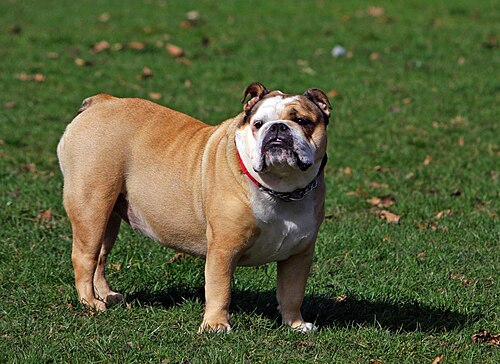


English Bulldog
🧠 Temperament & character
The English Bulldog is calm, friendly and very affectionate. It is considered patient and good with children and cuts a fine figure as a quiet family dog. Despite its easy-going nature it has courage and a certain wilfulness — sometimes it can be astonishingly stubborn. It barks little, seeks a lot of physical contact and is content with moderate exercise.
📜 Origin & history
The English Bulldog goes back to the old English bull-baiters, which were used until the 19th century for the cruel sport of bull-baiting. After this 'sport' was banned in 1835, the breed faced extinction; enthusiasts, however, bred it into a calmer, good-natured companion dog. In the process its appearance changed dramatically — unfortunately at the expense of its health, which is now a central issue for the breed.
✂️ Grooming, care & training
The English Bulldog's short coat is easy to care for, but the deep skin and facial folds must be cleaned regularly and kept dry to avoid infections. Its exercise needs are low: short, leisurely walks are enough, and in warm weather exertion must absolutely be avoided. As a strongly brachycephalic breed it is heat-sensitive and often breathes with difficulty. Mental stimulation with small games and training keeps it content without overtaxing it.
🩺 Health
The English Bulldog is unfortunately one of the breeds most burdened by health problems. Because of its extremely short head it often suffers from brachycephalic obstructive airway syndrome (BOAS) with sometimes severe breathing distress; added to this are skin-fold infections, eye and joint problems, heat sensitivity and frequent whelping difficulties, which often make a caesarean section necessary. With around eight to ten years, life expectancy is short. Responsible breeders focus on freer airways, longer noses and health tests — anyone who wants a Bulldog should specifically seek out such lines.
🏡 Who is this breed right for?
The English Bulldog suits calmer people and families looking for a cosy, affectionate companion with low exercise needs. It is well suited to apartment living and also to beginners, provided they are aware of the health challenges and possible veterinary costs. Important are a cool home in summer and the willingness to consistently attend to fold, breathing and weight care. Anyone prepared to deliberately choose a healthily bred puppy does the breed and their own dog a great favour.