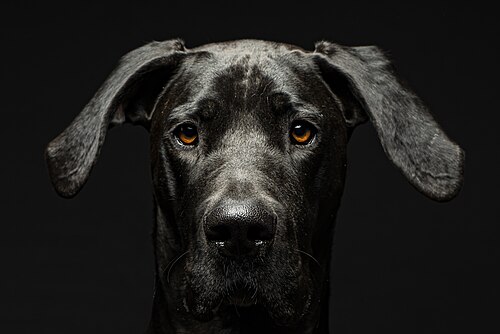
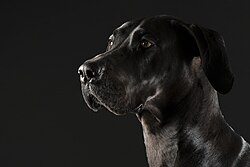
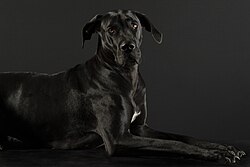
Great Dane
🧠 Temperament & character
Despite his imposing size, the Great Dane is an exceptionally friendly and balanced family dog. He is very attached to his people, constantly seeks physical contact and generally gets on well with children and other dogs. His need for exercise is moderate: after an extended walk he most likes to lie next to the family as the 'largest lapdog in the world'. Towards strangers he is usually calm and self-assured, without guarding intrusively.
📜 Origin & history
The Great Dane arose in the 19th century from heavy bull-baiting dogs and sighthound-type dogs that were used in Germany for hunting wild boar and as farm guardians. In 1878 breeders brought these regional strains together under the name 'Deutsche Dogge' and thereby laid the foundation for today's breed. The former boar-hunting dog quickly became a distinguished companion and status dog that was soon valued throughout Europe.
✂️ Grooming, care & training
The short, glossy coat of the Great Dane is easy to care for and needs only occasional brushing. More important is a well-considered upbringing: in the first year of life young dogs must be neither overfed nor overtaxed, so that bones and joints mature healthily. When fully grown, moderate but regular walks are enough for him; extended running and stair-climbing should be avoided during growth. Mentally the intelligent Great Dane is easy to guide, provided you work with him in a friendly and consistent way.
🩺 Health
Like many giant breeds, the Great Dane unfortunately has a short life expectancy of around seven to ten years. Among the serious problems are the life-threatening gastric torsion, dilated cardiomyopathy (a heart muscle disease), hip dysplasia and bone cancer (osteosarcoma). Responsible breeders examine their parent animals for heart and hips and pay attention to healthy ancestral lines. Owners can reduce the risk of gastric torsion with several small meals a day and rest after eating.
🏡 Who is this breed right for?
The Great Dane fits best in a house with enough space – a large dog simply needs room, even if he is remarkably calm indoors. Families with children and active but not sports-obsessed people will find a wonderful companion in him. Beginners can be quite happy with a Great Dane, but should be aware of the costs for food and the vet, and of the sadly short time together. In Switzerland he counts as a large dog in several cantons and may require a permit or a course – it is worth checking the cantonal regulations before acquiring one.