
German Hound
🧠 Temperament & character
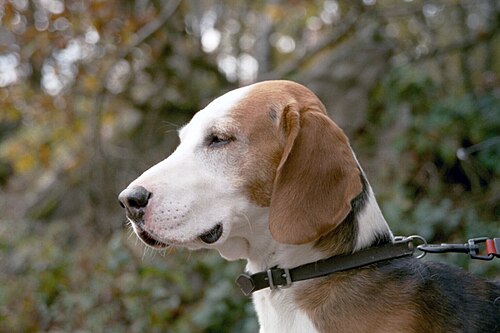
The German Hound is lively, enduring and keen-nosed – a passionate hunter who works on the trail with a bright voice and great persistence. Her nature is friendly, good-natured and affectionate, which makes her an easy-going companion in the house. She needs plenty of exercise and hunting or scent-intensive occupation to be content. Her pronounced hunting drive and her independence call for consistent leadership and secure containment.
📜 Origin & history
The German Hound emerged at the end of the 19th century in the Westphalian region around Olpe, where various old local hound strains were merged into a uniform breed. The aim was a versatile, keen-nosed scenthound for hunting hare, fox and other game in the low mountain ranges. Today she is the only remaining German hound breed of this type. To this day she is kept almost exclusively by hunters and is rare outside Germany.
✂️ Grooming, care & training
The German Hound's short, dense coat is weatherproof and very easy to care for; occasional brushing suffices. Her need for exercise, on the other hand, is high: she needs plenty of daily running, sustained movement and intensive scent work every day, ideally in a hunting context. Without enough occupation this active scenthound is under-challenged and restless. In training she is cooperative thanks to her good nature, but she follows her nose relentlessly; the long ears should be checked regularly.
🩺 Health
The German Hound is considered a robust, healthy breed with a life expectancy of about ten to thirteen years. Breed-typical hereditary diseases are rare, which is thanks to functional breeding for hunting performance. As with all drop-eared hounds, one should pay particular attention to the ears (infections) and check them regularly; the joints and paws of active hunters also deserve attention. Responsible breeders place value on health, temperament and working suitability.
🏡 Who is this breed right for?
The German Hound is a decidedly hunting dog and suits hunters' hands best, or a very active environment with plenty of scent work. For pure flat or family keeping without a hunting task she is little suited, as she would otherwise be under-challenged. She is good-natured and affectionate, but needs plenty of exercise and close integration. In Switzerland she is rare and found above all among hunters; outdoors, because of her hunting drive, lead rules and consideration for wildlife must be observed.