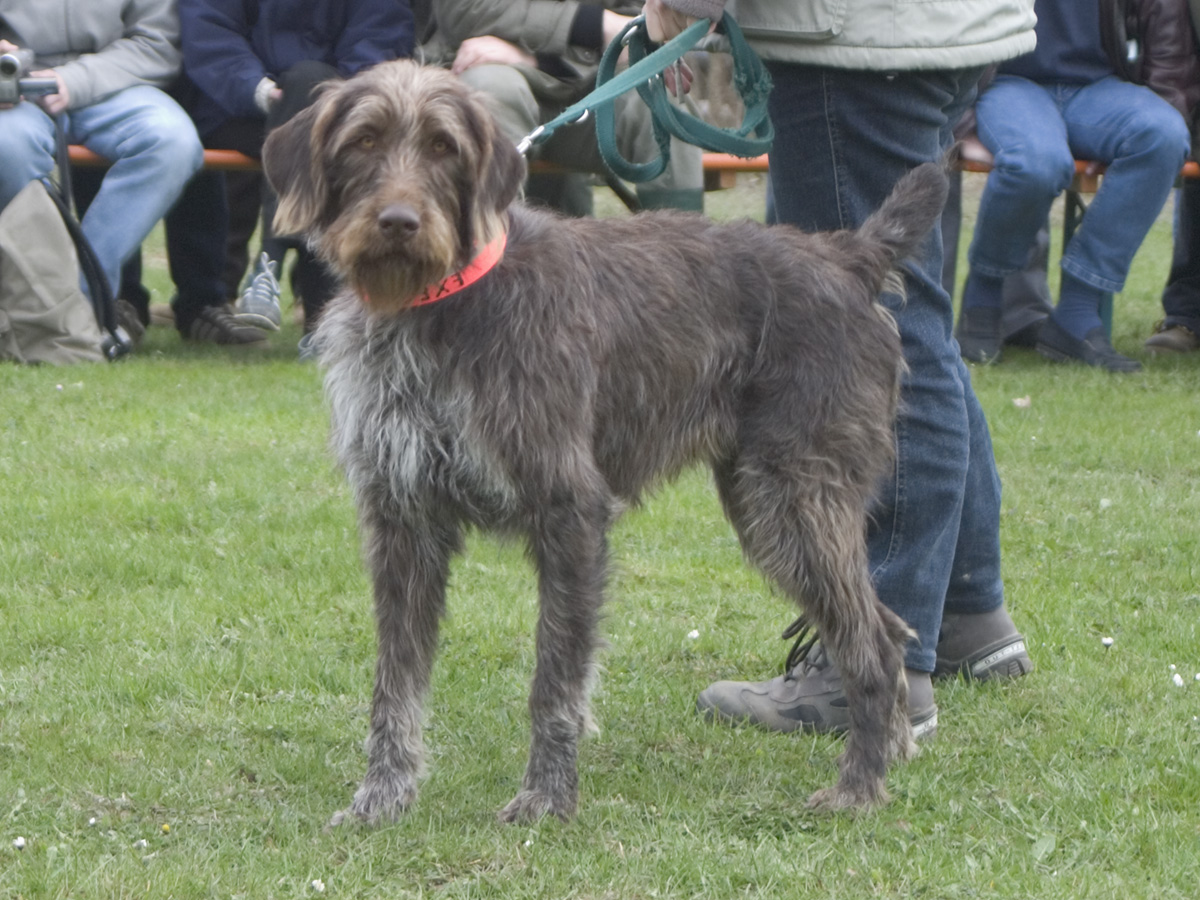
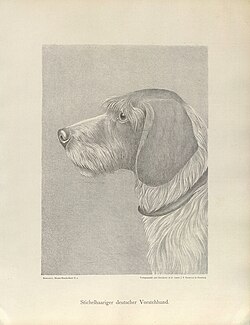
German Roughhaired Pointer (Deutsch Stichelhaar)
🧠 Temperament & character
The Deutsch Stichelhaar is weather-hardy, enduring and eager to work, with a pronounced need to hunt and move. He is intelligent, biddable and bonds closely with his person, but can be reserved towards strangers. As a classic working dog he needs a meaningful task and consistent, experienced leadership. When kept busy, he shows himself to be a loyal, reliable partner.
📜 Origin & history
The Deutsch Stichelhaar is one of the old rough-haired pointing dogs of Germany and served, among other things, as one of the founding breeds for the German Wirehaired Pointer. While the Wirehaired Pointer rose to become a popular mass breed, the original Stichelhaar came to the brink of extinction. Dedicated breeders campaigned for its preservation and continue the breed to this day in small numbers. He is considered a living piece of German hunting-dog history.
✂️ Grooming, care & training
The Deutsch Stichelhaar's hard, standing-off bristly coat is weatherproof and dirt-repellent; regular brushing and occasional trimming are enough. As a versatile working dog he has a high need for exercise and work, which is met by long runs, retrieving and scent work as well as hunting tasks. He is clever and willing to learn and needs mental occupation. Consistent, fair leadership brings out his abilities best.
🩺 Health
The Deutsch Stichelhaar is considered a robust, healthy breed with a life expectancy of around twelve to fourteen years. Thanks to work-oriented breeding, serious hereditary diseases are rare; as with larger pointing dogs, hip dysplasia can occasionally occur. Because of the very small population, careful, health-conscious breeding planning is particularly important. Responsible breeders x-ray the hips and pay attention to healthy parent animals.
🏡 Who is this breed right for?
The Deutsch Stichelhaar is very much a hunting working dog and belongs in experienced, active hands, ideally in a hunting context. For inexperienced owners or pure apartment keeping without a task he is unsuitable. In Switzerland he is extremely rare and finds a suitable home above all with hunters. Anyone interested in this breed should be prepared to contribute to its preservation and to keeping it occupied in a species-appropriate way.