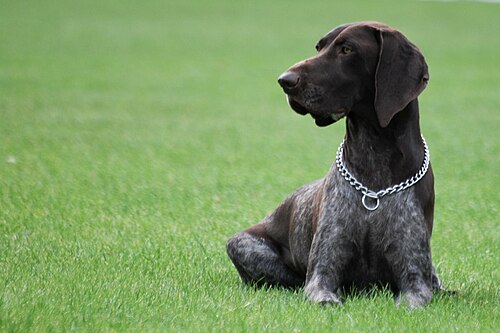
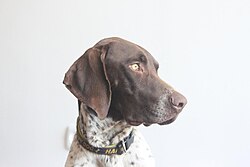
German Shorthaired Pointer
🧠 Temperament & character
The German Shorthaired Pointer is energetic, intelligent and decidedly eager to work, with a very high need for exercise. It is eager to learn, cooperative and bonds closely with its family, which is why it dislikes being left alone. In hunting as in sport it shows great passion and endurance, while at home, given enough activity, it is balanced and friendly. Without a meaningful task, its energy can quickly become a problem.
📜 Origin & history
The German Shorthaired Pointer emerged in Germany in the 19th century from old Spanish and Mediterranean pointing dogs, refined by crossing in the English Pointer for more elegance and pace. The aim was a versatile, refined working dog for all areas of hunting. The breed spread rapidly and became one of the most successful and popular hunting dogs worldwide. To this day it is highly valued both in hunting and in dog sport.
✂️ Grooming, care & training
The German Shorthaired Pointer's short, dense coat is very easy to care for and needs only occasional brushing. Its need for exercise, however, is enormous: it needs intensive daily activity through running, retrieving, nose work, hunting or dog sport such as dummy training, agility or canicross. As a clever, cooperative dog it learns quickly and enjoys working together with its person. With too little activity it can become restless and hard to channel.
🩺 Health
The German Shorthaired Pointer is considered a robust, athletic breed with a life expectancy of about twelve to fourteen years. Hip dysplasia occasionally occurs, and as with large, deep-chested breeds there is a certain risk of gastric torsion; eyelid malpositions can also occur. Regular ear checks are sensible with the drop ears. Responsible breeders x-ray the hips and pay attention to healthy, capable parent animals.
🏡 Who is this breed right for?
The German Shorthaired Pointer suits very active, sporty people and hunters who can satisfy its enormous urge to move. It is unsuitable for quiet households, less active owners or pure apartment keeping without activity. In Switzerland it is popular both with hunters and with sportily ambitious owners who compete with it in dog sport. It is only suitable as a family dog if exercise and activity are genuinely guaranteed every day.