Cimarrón Uruguayo
🧠 Temperament & character
The Cimarrón Uruguayo is courageous, even-tempered and self-assured, with a pronounced protective drive and great loyalty to his family. He is watchful and territorial, yet calmer and more steady-nerved than his powerful appearance might suggest. He meets strangers with reserve, while towards his people he is affectionate and reliable. As an independent, intelligent dog he needs clear, fair leadership and early socialisation. With the family's children he is usually patient, but his strength calls for supervision.
📜 Origin & history
The Cimarrón Uruguayo descends from dogs that European settlers brought to South America and which turned feral on the Uruguayan pampas – hence the name 'cimarrón', meaning 'feral'. These tough animals adapted to the harsh life and were recaptured by the gauchos and put to use as guard, protection and hunting helpers. In this way a hardy, courageous all-rounder developed that remains closely tied to the culture of rural Uruguay to this day. As the national dog he enjoys high esteem in Uruguay.
✂️ Grooming, care & training
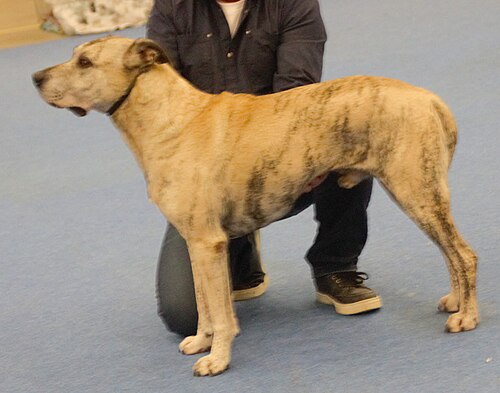
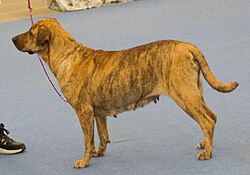
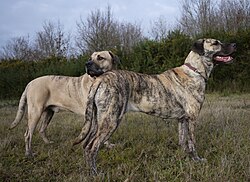
The short, dense coat – usually brindle or fawn with a dark mask – is very easy to care for and needs only occasional brushing. The Cimarrón Uruguayo is an active, enduring working dog that needs plenty of daily exercise and mental work to stay balanced. As a clever, independent dog he learns quickly but calls for consistent, fair training and early socialisation with people and other dogs. Ideal is a home that offers him both room to run and a meaningful task.
🩺 Health
Thanks to his origins in robust, naturally selected dogs, the Cimarrón Uruguayo is regarded as a particularly hardy breed with a life expectancy of around ten to twelve years. Serious breed-typical hereditary diseases are rare; as with many medium to large dogs, however, hip dysplasia can occur occasionally. Because of the breed's limited distribution outside South America the data situation is limited, which is why healthy, temperamentally sound parent animals are crucial. Responsible breeders x-ray the hips and pay attention to a stable temperament.
🏡 Who is this breed right for?
The Cimarrón Uruguayo suits active, experienced owners who can handle a powerful, watchful working dog and offer him exercise, tasks and clear rules. A house with a plot and a rural setting suit him; he is hardly suitable for city apartments or beginners. His protective drive and independence call for early socialisation and consistent leadership. In Switzerland one should check before acquiring one whether special regulations apply to molossoid protection dogs in the canton of residence.