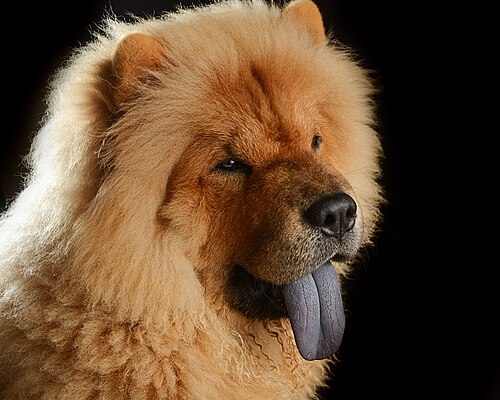
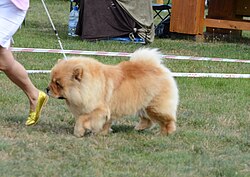
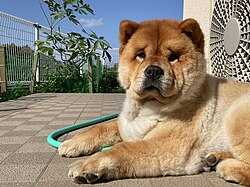
Chow Chow
🧠 Temperament & character
The Chow Chow is dignified, calm and markedly independent - a dog of great self-assurance and reserve. To his family he is loyally attached, while towards strangers he remains aloof and reserved, often with a watchful protective instinct. In his independence and pride he strongly resembles a cat: he seeks closeness on his own terms and will not be pushed into affection. Early socialisation and respectful, consistent leadership are decisive so that his self-confidence does not turn into stubbornness or sharpness.
📜 Origin & history
The Chow Chow looks back on a history in China several thousand years old and is one of the oldest known dog breeds. In his homeland he was a versatile working dog: he served as a watch and hunting dog, as a draught dog and was - distressing from today's perspective - also kept for meat and fur. His lion-like appearance also made him a temple and palace dog. In the 19th century he came to Europe, where among others Queen Victoria contributed to his popularity.
✂️ Grooming, care & training
The Chow Chow comes in a long-haired and a rarer short-haired variety; both carry a dense, double coat that needs regular brushing - several times a week in the long-haired dog - and sheds heavily during the moult. His need for exercise is moderate: calm, regular walks satisfy the leisurely Chow. Because of his dense coat and stocky build he is sensitive to heat and needs shade and consideration in summer. In training, patience, respect and early socialisation are called for; the proud Chow responds to pressure with rejection.
🩺 Health
The Chow Chow has a life expectancy of around 9 to 12 years. Typical of the breed are eye conditions, above all entropion (inward-rolled eyelids), which must be corrected surgically, as well as hip and elbow dysplasia. Because of his dense coat and often steep hindquarters he is also markedly sensitive to heat and exertion. Responsible breeders pay attention to healthy, open eyes, correct joints and free movement and avoid excessive coat volume or deeply sunken eyes.
🏡 Who is this breed right for?
The Chow Chow suits calm, self-assured people who value an independent, dignified character dog and do not expect an affectionate everybody's darling. Thanks to his moderate need for exercise he is also suited to quieter households and is conditionally suitable for a flat, but he needs cool conditions. For first-time owners he is only conditionally suitable because of his independence and aloofness; with respectful, older children he gets along. In Switzerland his heat sensitivity should be taken seriously, giving him plenty of shade and rest in summer.