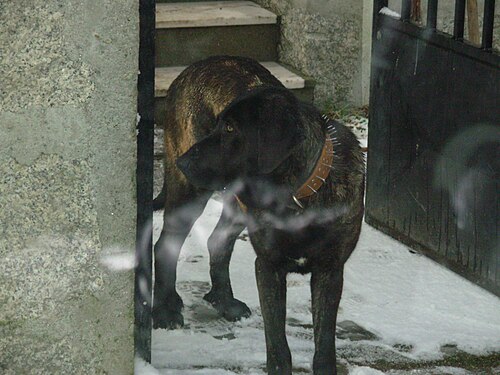
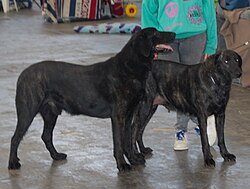
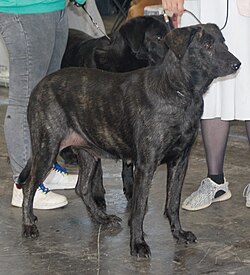
Castro Laboreiro Dog
🧠 Temperament & character
The Cão de Castro Laboreiro is attentive, independent and distrustful of strangers - a classic livestock-guardian and watchdog with pronounced territorial behaviour. Towards his family he is loyal and devoted, but in an emergency he makes his own decisions. Famous is his special bark, which rises in pitch and can be heard far and wide while working. He is steady in temperament and courageous, but needs confident leadership and plenty of socialisation to remain under control. With familiar children he is generally patient, yet he remains a watchful working dog.
📜 Origin & history
The Cão de Castro Laboreiro comes from the mountainous region around the village of the same name in northern Portugal, near the Peneda-Gerês National Park. For centuries he guarded the mountain farmers' herds there against wolves and other predators. As one of the oldest Iberian breeds he is barely over-bred and has retained his original working character. Outside Portugal he is very rare and is regarded there as a living piece of rural cultural heritage.
✂️ Grooming, care & training
The dense, medium-length coat in the typical 'mountain colour' (brindle) is weatherproof and easy to care for; regular brushing is enough. The Cão de Castro Laboreiro is enduring and eager to move and needs plenty of daily exercise as well as, ideally, a task outdoors. As an independent working dog he requires early, patient socialisation and fair, confident leadership, for blind obedience is not in his nature. Mental stimulation is important so that he can put his watchful nature to good use and does not bark excessively.
🩺 Health
The Cão de Castro Laboreiro is considered a robust, primitive breed with a pleasingly long life expectancy of around twelve to thirteen years. As a largely naturally bred dog he has few breed-typical hereditary diseases, but as with many medium-sized to large dogs, hip dysplasia can occur. Because of the breed's rarity the available data is limited, which is why the health and temperament of the parent animals are particularly important. Responsible breeders X-ray the hips and place value on genetic diversity.
🏡 Who is this breed right for?
The Cão de Castro Laboreiro is suited to experienced, active owners with a house, land and an understanding of a primitive guard and livestock-guardian dog. He is not made for city flats, beginners or quiet people; he needs space, exercise and a meaningful task. His guarding drive and his striking bark should be channelled in a suitable rural setting. In Europe outside Portugal he is a true rarity and is found mainly among enthusiasts of primitive working breeds.