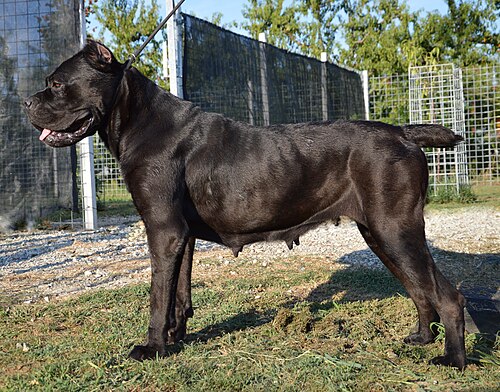
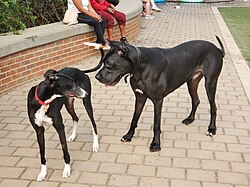
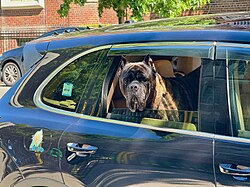
Cane Corso
🧠 Temperament & character
The Cane Corso is self-assured, watchful and protective, yet balanced and closely attached to his family. He is trainable and eager to work, at the same time powerful and territorial, which makes clear, composed leadership indispensable. Towards strangers he is naturally reserved and attentive, without being aggressive for no reason. With his own family's children he is usually patient and affectionate, though his strength always calls for supervision. Early, thorough socialisation is the key to a confident, composed Cane Corso.
📜 Origin & history
The Cane Corso comes from southern Italy and is regarded as a descendant of the Roman molossers, which served as war, guard and droving dogs. For centuries he was an all-rounder on the farms: he guarded house and livestock, drove cattle and even helped hunt wild boar. As agriculture changed the breed almost fell into oblivion, until it was rescued and rebuilt by Italian enthusiasts in the 1970s and 1980s. Today the Cane Corso is known worldwide as an impressive protection and companion dog.
✂️ Grooming, care & training
The short, dense coat is very easy to care for and needs only regular brushing. The Cane Corso is an athletic dog with a clear need for exercise: he needs long daily walks, free running and mental occupation to stay balanced. As a clever, work-oriented dog he loves to learn and benefits from a job such as tracking, obedience or protection dog sport under expert guidance. Consistent, positive training and early socialisation are crucial from the very start with this powerful dog.
🩺 Health
The Cane Corso has a life expectancy of around ten to eleven years and is comparatively robust for a large mastiff. Breed-typical risks include hip dysplasia, eyelid defects such as entropion or ectropion, and the life-threatening gastric torsion; idiopathic epilepsy also occurs. Responsible breeders X-ray hips and elbows, have the eyes examined and pay attention to healthy hearts and a stable temperament. Moderate feeding and caution after meals help lower the risk of gastric torsion.
🏡 Who is this breed right for?
The Cane Corso is a dog for experienced, active owners who can offer him clear leadership, plenty of exercise and a meaningful task. He is not suitable for beginners, small apartments or people with little time; he needs space, occupation and close family contact. In Switzerland the Cane Corso is on breed lists in several cantons or subject to a permit and temperament-test requirement – the cantonal legal situation must be checked before acquisition. Those who do him justice gain a loyal, composed protector and family dog.