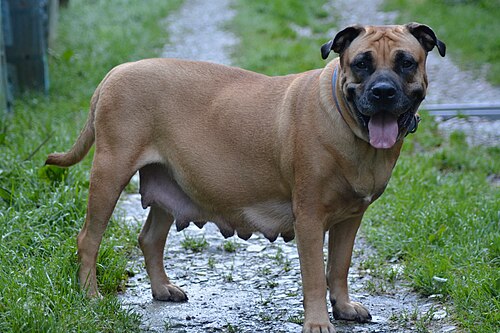
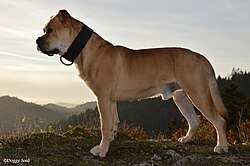
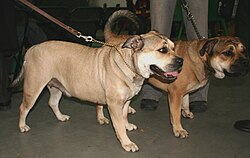
Ca de Bou (Perro Dogo Mallorquín)
🧠 Temperament & character
The Ca de Bou is brave, calm and loyal to his family - a self-assured, territorial guardian that appreciates experienced handling. In everyday life he is usually composed and balanced, but becomes alert and determined when he sees his home threatened. He meets strangers with initial reserve, while building a close, affectionate bond with his people. He can be independent and strong-willed, which is why early socialisation and consistent, fair training are important. With the family's children he is generally patient and gentle.
📜 Origin & history
The Ca de Bou arose on Mallorca from a mix of Iberian mastiffs and English bulldogs that reached the island through Mediterranean trade. His name means 'bull dog' in Mallorquin and refers to his sad former use in bullfights and animal fights, as well as for droving and guarding livestock. After these fights were banned, the breed almost fell into oblivion and was later carefully rebuilt. Today the Ca de Bou is a rare but valued guard and companion dog.
✂️ Grooming, care & training
The short, hard coat is extremely easy to care for and needs only occasional brushing. The Ca de Bou has a moderate need for exercise: daily walks and a little play are enough, though he likes to be challenged both physically and mentally. In hot weather he should be spared exertion, as his compact, slightly short-headed build makes heat regulation more difficult. Early socialisation and calm, consistent training that channels his will fairly without breaking it are important.
🩺 Health
The Ca de Bou is considered a fairly robust breed with a life expectancy of around ten to twelve years. Occasionally hip dysplasia and eyelid defects (entropion/ectropion) occur, as in many molossers. Because of the somewhat stocky muzzle, care should be taken to ensure free breathing and to avoid overheating. Responsible breeders X-ray the hips, check the eyes and value a stable, not over-typed appearance.
🏡 Who is this breed right for?
The Ca de Bou suits experienced, calm owners who are looking for a self-assured guardian with a Mediterranean temperament and can offer him clear leadership. A house with a garden suits his nature, but thanks to his manageable size he can also live in a larger apartment if kept sufficiently occupied. For inexperienced first-time owners he is only suitable to a limited extent because of his will and protective instinct. In Switzerland, depending on the canton, you should check whether special regulations apply to molosser breeds.