Bouvier des Flandres
🧠 Temperament & character
The Bouvier des Flandres is calm, self-assured and brave. He is loyal, protective and closely bonded with his family, but watchful and reserved towards strangers. As a powerful working dog he needs consistent leadership and meaningful occupation to stay balanced. Despite his size he is calm and even-tempered in the house, provided he gets enough to do.
📜 Origin & history
The Bouvier des Flandres originated in the Flanders border region between Belgium and France, where he worked as a powerful cattle and droving dog. His Flemish nickname 'Vuilbaard' ('dirty beard') alludes to his rough, often soiled beard. In the First World War he rendered valuable service as a messenger and ambulance dog and afterwards came close to extinction. Today he is valued above all as a protection, service and family dog.
✂️ Grooming, care & training
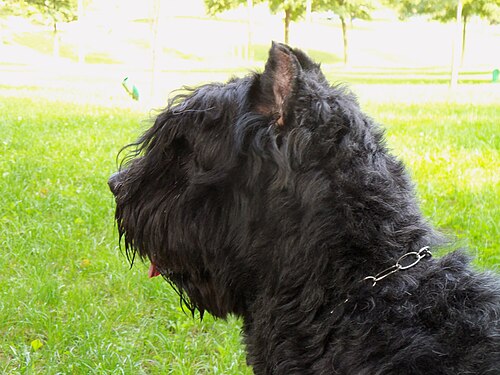
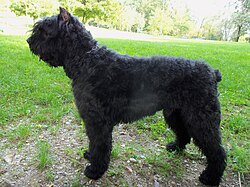
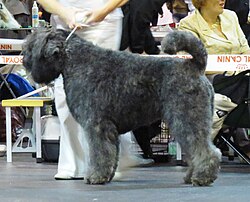
The rough, wiry coat with its dense undercoat, along with the beard and eyebrows, requires regular grooming: it should be brushed often and trimmed occasionally, especially around the face. As a large working dog the Bouvier des Flandres needs plenty of exercise and mental stimulation. Tracking, protection work, obedience or long walks keep him content. He enjoys learning but needs a calm, consistent and fair hand.
🩺 Health
The Bouvier des Flandres has a life expectancy of around 10 to 12 years. Typical of the breed, hip dysplasia and glaucoma can occur; the deep chest also brings an elevated risk of life-threatening gastric torsion. Reputable breeders x-ray the hips and pay attention to healthy eyes. Owners should know the signs of gastric torsion and avoid heavy exertion after feeding.
🏡 Who is this breed right for?
The Bouvier des Flandres belongs in experienced, active hands that can offer a large protection dog leadership, time and tasks. He is less suited to first-time owners or a small city apartment, but in a calm, self-assured family with a house and garden he is a loyal protector. With the children of his family he is usually patient. In Switzerland one should bear in mind that large protection dogs require solid socialisation and, in some cantons, are subject to keeping regulations.