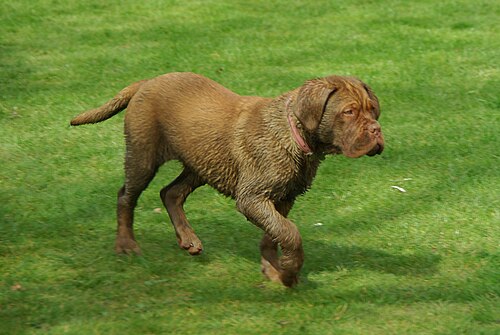
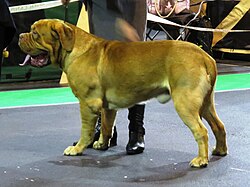
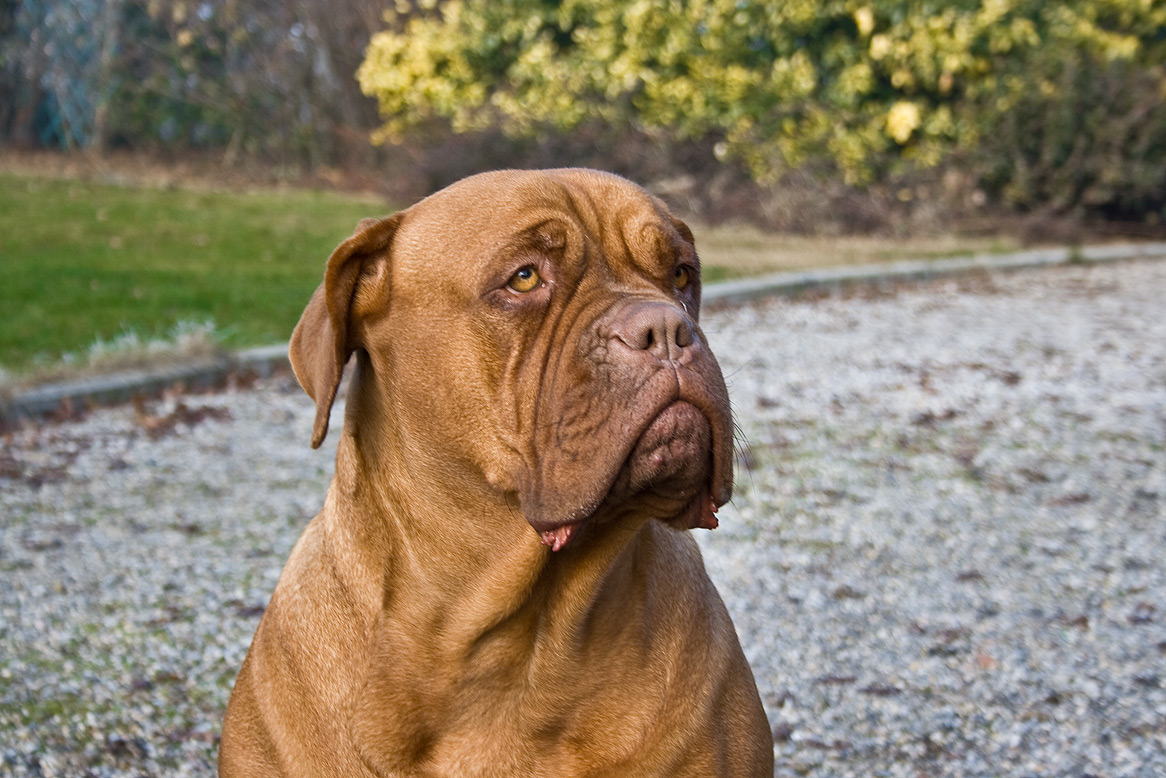
Dogue de Bordeaux
🧠 Temperament & character
The Dogue de Bordeaux is calm, even-tempered and devotedly loyal to its family – a gentle giant that seeks close contact with its people. As a powerful guardian it is watchful and brave without being aggressive for no reason, and is reserved towards strangers at first. It can show a pronounced stubbornness, which is why it needs experienced, sensitive guidance. With the children of the family it is usually patient and loving, though its size always demands supervision. It is not a hectic dog, but rather easy-going and affectionate.
📜 Origin & history
The Dogue de Bordeaux is one of the oldest French breeds and comes from the region around Bordeaux in south-western France. Its ancestors were powerful mastiffs used to guard estates, drive cattle and, in earlier times, for animal fights. After severe drops in numbers in the 20th century the breed was carefully rebuilt. It gained worldwide fame through the film 'Turner & Hooch', in which a Dogue de Bordeaux played the leading role.
✂️ Grooming, care & training
The short coat is easy to care for, but the deep facial folds must be cleaned regularly and kept dry to prevent skin inflammation. The Dogue de Bordeaux also drools noticeably, which is part of the breed. Its exercise needs are moderate: relaxed, not-too-long walks are sufficient, and in the heat great caution is needed because of the shortened muzzle. It is rather calm and easy-going; early, friendly training and patient consistency are more important than athletic drilling.
🩺 Health
The Dogue de Bordeaux unfortunately has one of the shortest life expectancies of all dog breeds, often only around five to eight years. As a heavy, short-headed molosser it is prone to heart disease, hip dysplasia, various types of cancer and the life-threatening gastric torsion, in addition to brachycephalic breathing problems. Responsible breeders examine the heart and hips, pay attention to airways that are as clear as possible and avoid extreme, over-typed breeding forms. Prospective owners should be aware of the serious health risks and the short lifespan.
🏡 Who is this breed right for?
The Dogue de Bordeaux suits calm, experienced owners with a house, time and understanding for a powerful but health-sensitive molosser. For city apartments it is less suitable because of its size, and for very sporty people it is likewise unsuitable because of its heat sensitivity. Its gentle nature makes it a loving family dog, but the short life expectancy and possible veterinary costs should be realistically considered. In Switzerland, prospective owners should check whether special regulations apply to large molossers in their canton of residence.