
Bedlington Terrier
🧠 Temperament & character
At home the Bedlington Terrier is a gentle, calm and affectionate companion that seeks the closeness of his people. Outdoors, however, his true terrier nature shows: fast, brave and with a pronounced hunting instinct that makes him an enthusiastic sprinter. Towards other dogs he can be scrappy when he feels challenged, which is why early socialisation is important. He is intelligent, sensitive and likes to learn, but for that he needs a friendly yet consistent hand.
📜 Origin & history
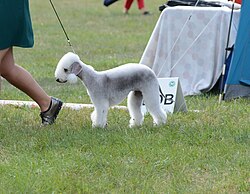
The Bedlington Terrier comes from the small mining town of Bedlington in Northumberland in the north-east of England, where it arose in the early 19th century. Miners and tinkers used it as a versatile hunter that caught rats, rabbits and other vermin and in some places also shone at dog races and betting events. Its whippet-like build with an arched back reveals the sighthound blood crossed in, which gives it its high speed. Over time the tough working dog also became an elegant show and companion dog.
✂️ Grooming, care & training
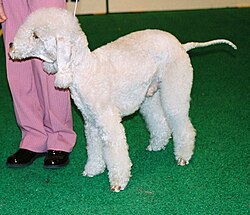
The Bedlington Terrier's curly coat, a mixture of soft and harder hair, sheds hardly at all, but must be brushed regularly and professionally clipped and shaped roughly every six to eight weeks. Despite his calm nature indoors, he is an active dog that needs brisk daily walks, exercise and the chance to run. Because he is inclined to hunt, in unsecured terrain he should only run with a good recall or on the lead. Mental occupation and varied training keep the clever mind busy.
🩺 Health
The most important health issue in the Bedlington Terrier is hereditary copper storage disease (copper toxicosis), in which copper accumulates in the liver and can damage it. There is a reliable DNA test for the underlying gene defect, which is why reputable breeders test their breeding animals and plan matings so that no affected puppies are born. In addition, eye diseases and occasionally kidney problems can occur. With good breeding and preventive care, the Bedlington usually reaches an age of twelve to fourteen years.
🏡 Who is this breed right for?
The Bedlington Terrier suits active people and families who want a low-shedding, medium-sized dog with a gentle disposition and a sporty core. He can live in an apartment if he gets enough daily exercise, but feels especially content with a garden and plenty of room to run. He is quite suitable for first-time owners, provided they are aware of the grooming effort and the importance of the health tests. Since he is calm at home, he is also well suited to allergy-sufferer households, but should be kept under control around small animals because of his hunting instinct.