Basset Hound
🧠 Temperament & character
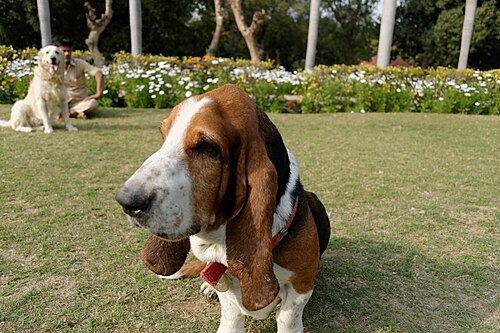
The Basset Hound is good-natured, calm and decidedly affectionate, yet proverbially stubborn - he likes to do things at his own pace. As a sociable pack dog he loves company, is patient with children and usually gets along well with other dogs. He definitely puts his deep, loud voice to use, and as soon as his nose picks up a trail he follows it persistently. Despite his emphatically laid-back manner he is not a couch dog alone, but a dog with an underestimated need for exercise and occupation.
📜 Origin & history
The Basset Hound emerged in the 19th century from French bassets that came to Great Britain and were selectively bred on there. Crossings were made, among others, with the bloodhound to emphasise the nose, the build and the characteristic long ears and folds. The aim was a low-set scent hound that hunters on foot could follow well when hunting small game. In the 20th century this working dog became a family dog popular worldwide and an advertising icon.
✂️ Grooming, care & training
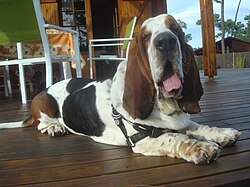
The Basset Hound's short, dense coat is easy to care for, but sheds noticeably and needs regular brushing. Considerably more effort is demanded by the long ears and the skin folds, which must be checked frequently and kept clean to prevent inflammation. He needs regular, joint-friendly exercise and plenty of scent work, while strict weight control is decisive, as excess weight puts great strain on the long back. In training, his stubborn, greedy character calls for plenty of patience, motivation through food and consistency.
🩺 Health
In the Basset Hound an honest engagement with health is important, for his extreme form brings with it some risks. Common are disc problems (IVDD) due to the long back, chronic ear infections, eyelid faults such as ectropion, as well as excess weight and joint problems; elbow dysplasia, glaucoma and the hereditary blood-clotting disorder Basset thrombopathia also occur. Life expectancy is around ten to twelve years. Responsible breeders rely on moderate proportions, test the eyes, blood clotting and joints and avoid excessive folds and deeply drooping eyelids.
🏡 Who is this breed right for?
The Basset Hound suits patient families and people who like a sociable, cosy but decidedly stubborn dog and bring a sense of humour. For beginners he is suitable with realistic expectations, provided they have time for grooming, ear checks and weight management. Because of his calm manner he also gets by with a flat, but he needs daily exercise and scent occupation. In Switzerland he is a popular, unobtrusive companion dog; outdoors, good securing is important because of his scenting drive and difficult recall.