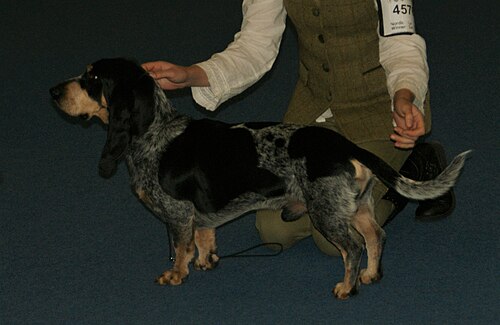
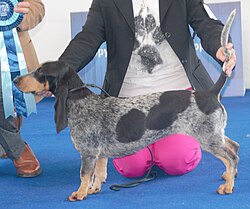
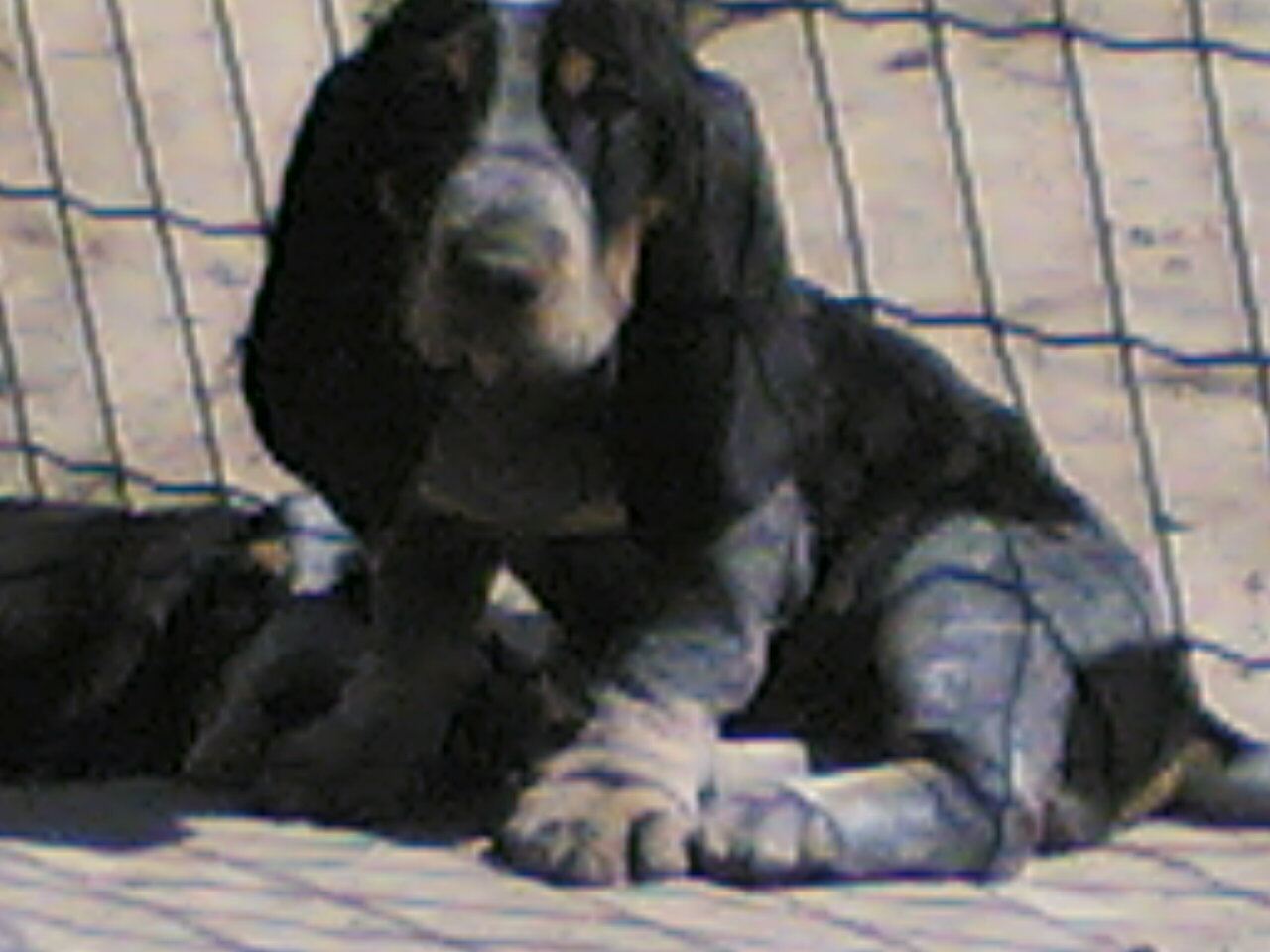
Basset Bleu de Gascogne
🧠 Temperament & character
The Basset Bleu de Gascogne is lively, sociable and enduring, with a fine nose and a sonorous, deep voice that he likes to use. He is friendly and balanced, very attached to his family and gets on well with children and other dogs. As a classic pack dog he loves company and works on the hunt with great passion and stamina. His independent manner on the trail, however, calls for a patient hand and plenty of occupation for the nose.
📜 Origin & history
The Basset Bleu de Gascogne comes from south-west France and goes back to the old Gascon scent hounds, in particular the Grand Bleu de Gascogne. From the short-legged representatives of these bloodlines, a low-set dog was bred that was slower and better suited to hunting small game on foot. Towards the end of the 19th century the breed had almost disappeared, but it was revived by dedicated breeders such as Alain Bourbon. Today it is a rare but valued hunting and companion dog.
✂️ Grooming, care & training
The short, dense coat of the Basset Bleu de Gascogne is easy to care for and needs only occasional brushing. More important are care of the long drop ears, which must be checked regularly, and control of his weight in order to spare the long back. He needs regular, ample exercise and, above all, plenty of nose work, because sniffing is his great passion. In training he is cooperative thanks to his affectionate nature, but follows his nose relentlessly - a motivating, patient approach pays off.
🩺 Health
The Basset Bleu de Gascogne is fundamentally robust and usually reaches an age of twelve to fourteen years. As with all bassets, the main risks lie in the long back (disc problems), the long ears (infections) and the tendency to become overweight. Occasionally eyelid defects or gastric torsion can be an issue. Serious breeders pay attention to functional proportions, healthy eyes and a resilient musculoskeletal system and avoid exaggerated features.
🏡 Who is this breed right for?
The Basset Bleu de Gascogne suits active families and people who appreciate his passion for hunting and his sociable character. He also copes in a larger home without a forest of his own, but then needs plenty of daily exercise and nose work. As a pack dog he should not be alone much and enjoys living with human or animal company. In Switzerland he is rare and found mainly among hunters; outdoors, because of his tracking drive, leash rules and consideration for wildlife must be observed.