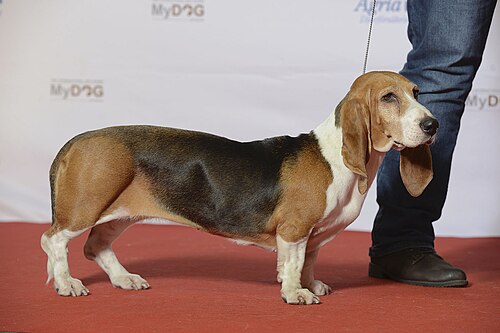
Basset Artésien Normand
🧠 Temperament & character
The Basset Artésien Normand is friendly, even-tempered and affectionate, yet decidedly headstrong – typical of a scent hound with an independent way of working. It loves company, gets along well with children and other dogs, and shows hardly any aggression. On walks it enthusiastically follows every interesting trail and can then become deaf to its surroundings. Its calm, good-natured manner indoors makes it a pleasant housemate, provided one takes its stubborn streak with humour.
📜 Origin & history
The Basset Artésien Normand arose in 19th-century France from the merging of the bassets from the Artois region with those from Normandy. Breeders such as Léon Verrier shaped the breed and placed value on the typical short, slightly bent legs and the noble head. Originally the dog was bred for hunting on foot for rabbit and hare, where its slow, thorough searching was an advantage. As one of the founding sires of the English Basset Hound, it helped shape basset breeding worldwide.
✂️ Grooming, care & training
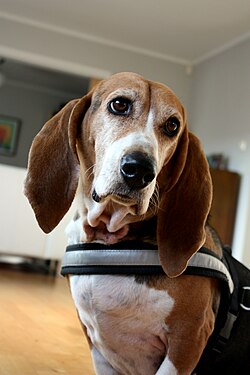
The Basset Artésien Normand's short, dense coat is uncomplicated and needs only regular brushing. The long drop ears, on the other hand, demand a great deal of attention, as they must be checked and cleaned frequently, as does the weight, since excess weight burdens the long back. It needs moderate but regular exercise and plenty of nose work to be mentally occupied. In training, patience is required: its stubborn, independent character responds best to calm, motivating and consistent leadership.
🩺 Health
The Basset Artésien Normand is mostly healthy and often lives twelve to fourteen years. As with all short-legged bassets, the long back (intervertebral disc problems), the long ears (chronic infections) and the tendency to excess weight are the main weak points. Eyelid problems such as ectropion can also occur. Responsible breeders pay attention to healthy proportions, check the eyes and joints, and avoid exaggerated features that burden the musculoskeletal system.
🏡 Who is this breed right for?
The Basset Artésien Normand is suited to families, calmer active people and indeed to patient beginners who appreciate its stubborn charm. Thanks to its size it copes even in a larger apartment, provided it gets daily exercise and enough nose work. It is sociable and should not be left alone for long. In Switzerland it is popular as a charming, unobtrusive companion dog; on walks in the forest, however, a watchful eye and observance of the leash rules are advisable because of its scenting drive.