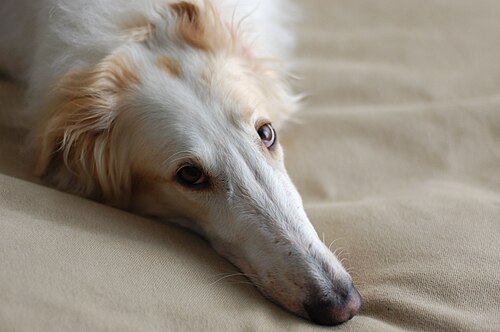
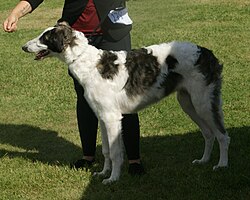
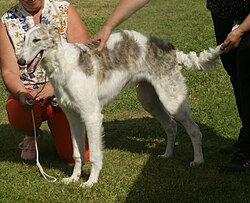
Borzoi
🧠 Temperament & character
The Borzoi is calm, gentle and reserved, in the home a decidedly relaxed and dignified dog. It is loyally attached to its family, but rather reserved and unobtrusive towards strangers. As a sensitive sighthound it does not tolerate a harsh hand and responds only to calm, respectful guidance. Outdoors its very pronounced hunting drive awakens, which can make it lightning-fast and hard to reach.
📜 Origin & history
The Borzoi was bred over centuries by the Russian high nobility for the spectacular wolf hunt on horseback, in which the dogs cornered and held the wolf. On the great estates whole packs of these noble sighthounds were kept, and owning them was considered a status symbol. After the October Revolution of 1917 the stock was heavily decimated, but animals exported beforehand secured the survival of the breed abroad. Today the Borzoi is an elegant companion, show and coursing dog.
✂️ Grooming, care & training
The Borzoi's long, silky coat requires regular brushing, especially during the moult, in order to avoid matting. As a sighthound it needs the opportunity to gallop freely and fast in a secured area, but is surprisingly undemanding and calm in everyday life. Because of its very high hunting drive it should stay on the lead outside safe zones, and its recall is only conditionally reliable. It is intelligent and sensitive; training requires tact, patience and the avoidance of any coercion.
🩺 Health
At about nine to twelve years, the Borzoi has a rather limited life expectancy typical of large dogs. As a large dog with a deep chest it is particularly prone to life-threatening gastric torsion, which is why feeding calmly and in several small portions is important. Further risks are cardiac arrhythmias as well as the anaesthesia sensitivity typical of sighthounds. Responsible breeders have the heart examined and pay attention to a balanced temperament and a good overall constitution.
🏡 Who is this breed right for?
The Borzoi suits calm, experienced dog owners with enough space who appreciate its gentle, sensitive manner. In the home it is a quiet, pleasant housemate, but one that needs the daily opportunity for extensive galloping. For first-time owners it is only conditionally suitable because of its hunting drive and its sensitivity, and caution is called for with small pets. In Switzerland its pronounced hunting drive, the lead requirement in many regions and the space needs of such a large dog should be borne in mind.