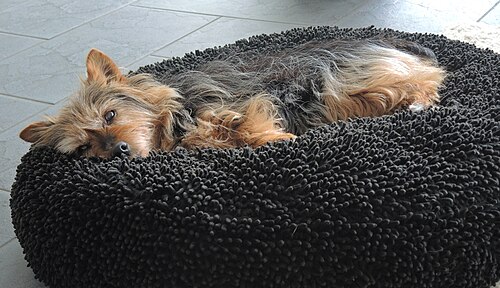
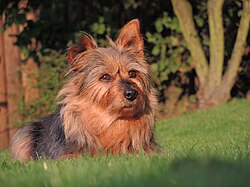
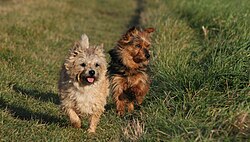
Australian Terrier
🧠 Temperament & character
The Australian Terrier is lively, brave and self-confident, yet surprisingly good-natured and affectionate towards his family. He is an attentive guardian who reliably announces anything unfamiliar, and possesses a distinct hunting drive for small animals. He gets on well with children and is usually more sociable than many a British terrier. Clever and eager to work, he wants to be kept occupied and appreciates being a real partner in everyday life.
📜 Origin & history
The Australian Terrier arose in the 19th century, when British emigrants brought various rough terriers – including ancestors of the Cairn, Dandie Dinmont and Yorkshire Terrier – to Australia. From these dogs the settlers shaped a robust all-rounder that fought pests, warned of snakes and guarded the farm. First exhibited in 1868, he was one of the first pedigree dogs recognised and bred in Australia. His hard coat and his toughness made him the ideal companion for harsh country life.
✂️ Grooming, care & training
The Australian Terrier's hard, smooth topcoat is easy to care for and weatherproof; regular brushing suffices, and instead of clipping, the coat is traditionally stripped (plucked) to preserve its texture. He needs daily exercise in the form of walks, free running and play, plus mental tasks that challenge his alert mind. As a clever, willing dog he learns quickly but can be headstrong, which is why consistent, motivating training works best. Scent games, retrieving and dog sports such as agility give him great pleasure.
🩺 Health
The Australian Terrier is considered a particularly robust and long-lived breed with a life expectancy of about twelve to fifteen years. Nevertheless, patellar luxation, Legg-Calvé-Perthes disease, diabetes mellitus as well as allergies and skin problems occasionally occur. Responsible breeders examine the knee joints and eyes of their breeding animals and pay attention to allergy-free, stable lines. A balanced diet and exercise help keep the diabetes risk, which is elevated in small breeds, low.
🏡 Who is this breed right for?
The Australian Terrier is a versatile, uncomplicated companion who suits active individuals just as well as families with children. Thanks to his size he feels comfortable in an apartment, provided he gets enough daily exercise and tasks; a house with a garden, however, suits him very well. He is also well suited to first-time dog owners, since he is willing to learn and robust – though the typical terrier hunting drive should be taken into account. In Switzerland he is a pleasant everyday dog who loves hikes and outings.