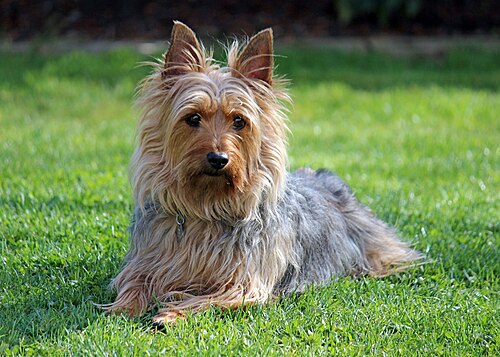
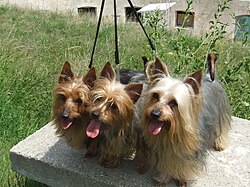
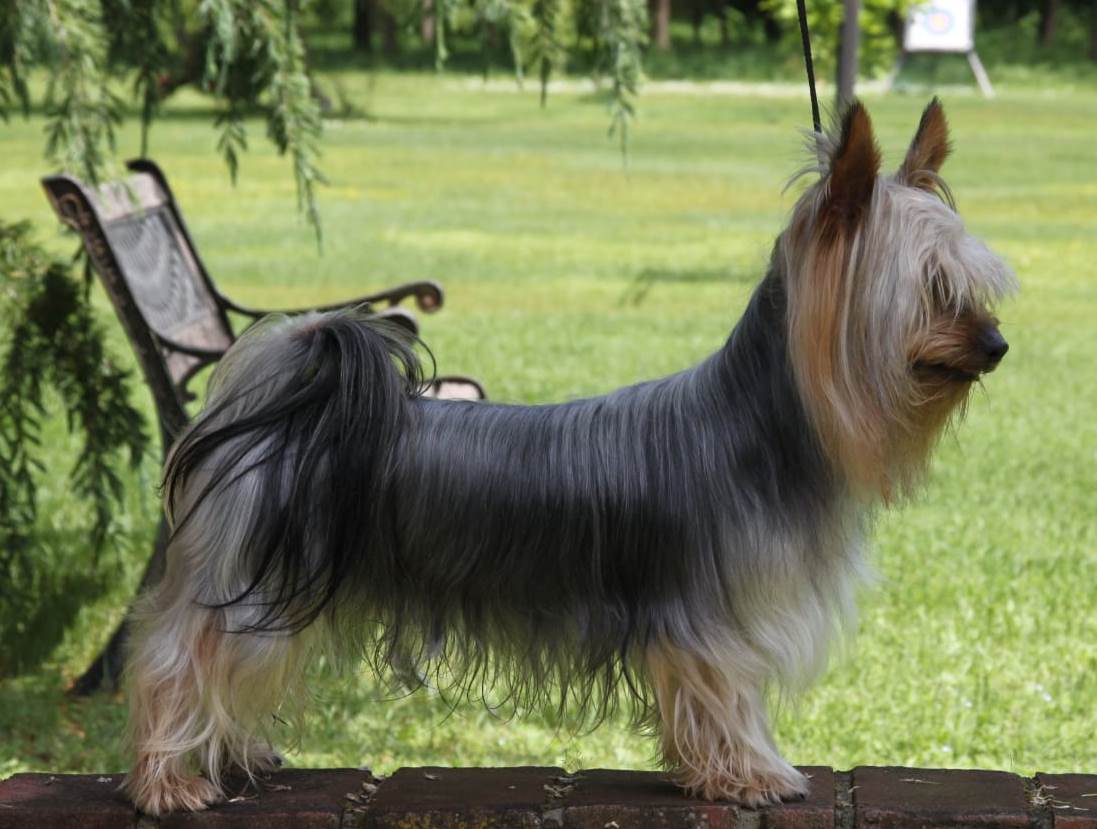
Australian Silky Terrier
🧠 Temperament & character
Bright, attentive and always up for an adventure, the Australian Silky Terrier is a lively companion that bonds closely with its person. Despite its small size it has a pronounced prey and hunting drive, which is why it is not always harmless towards cats and small animals. Towards children it is friendly, but does not tolerate rough handling and reliably announces every visitor with an alert bark. It can show a certain stubbornness and needs loving, consistent guidance.
📜 Origin & history
The Australian Silky Terrier emerged at the beginning of the 20th century in Australia's cities, especially in Sydney, from crossing the Yorkshire Terrier and the Australian Terrier. The aim was an elegant companion dog with a silky coat that was at the same time nimble enough to keep rats and vermin in check. Long known as the 'Sydney Silky', the breed was officially fixed under a uniform standard in 1959. Today it is valued worldwide as a charming companion dog.
✂️ Grooming, care & training
The Australian Silky Terrier's long, silky hair grows without a dense undercoat and should be brushed several times a week so that it does not mat and stays glossy. Despite its salon look it is an active dog that needs daily brisk walks, play and mental tasks. A bored Silky tends to bark and dig, which is why search games, little tricks or dog sports make it happy. It is eager to learn but headstrong – short, friendly and varied training sessions work best.
🩺 Health
The Australian Silky Terrier is generally robust and often reaches an age of twelve to fifteen years. Like many small breeds it can be prone to patellar luxation (dislocation of the kneecap) and to Legg-Calvé-Perthes disease of the femoral head; tracheal collapse and diabetes also occur. Reputable breeders have their parent animals examined for knee joints and eyes and pay attention to healthy teeth and breeding stock. Since tartar is common in toy dogs, regular dental care and check-ups are part of prevention.
🏡 Who is this breed right for?
The Australian Silky Terrier is a good match for active individuals, couples and families with older children who want a small but spirited dog. For the apartment it is suitable thanks to its size, provided it gets enough daily exercise and occupation – it is not a pure couch dog. It is also manageable for beginner-friendly owners, if they take the typical terrier character with its love of barking and hunting drive into account. In Swiss cities it feels at ease, but is delighted by outings into nature.