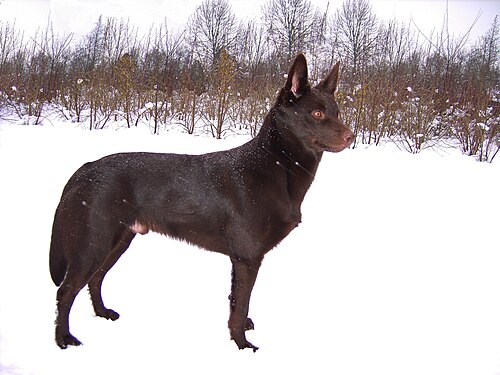
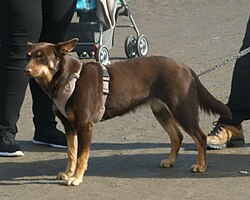
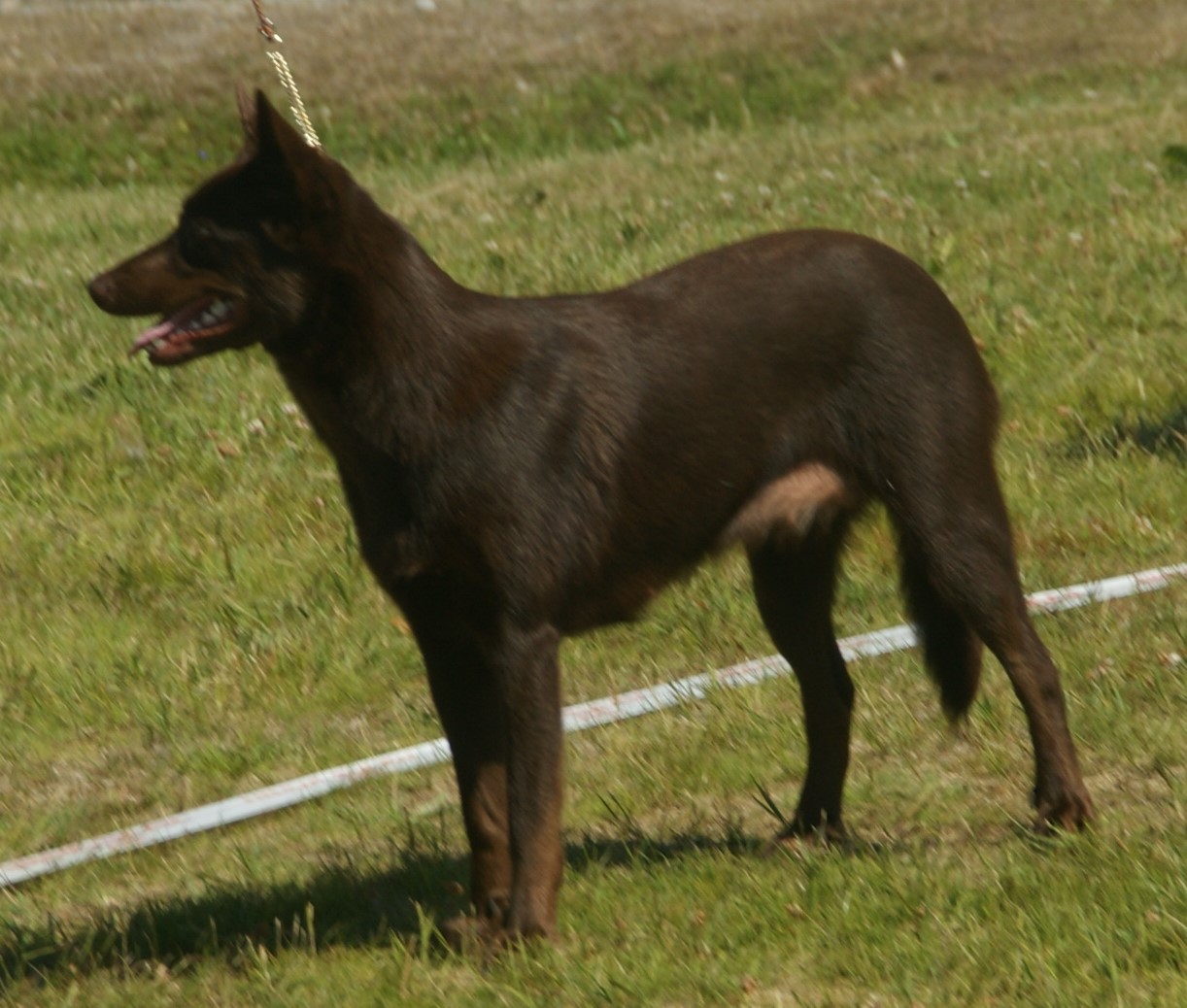
Australian Kelpie
🧠 Temperament & character
The Kelpie is extremely eager to work, highly intelligent and practically never tired. He is alert, keen to learn and bonds strongly with his person, but can be reserved towards strangers. Without a meaningful task he quickly gets bored and invents his own activities. Given a clear task, however, he shows impressive concentration and steady nerves.
📜 Origin & history
At the end of the 19th century, Australian farmers crossed working collies imported from Scotland to create a dog for the vast sheep stations. The name goes back to a famous black-and-tan bitch named 'Kelpie', whose descendants proved to be outstanding herders. To this day the Kelpie is known for running even across the backs of the sheep in tight pens ('backing') to steer the flock.
✂️ Grooming, care & training
The short, weatherproof double coat is remarkably low-maintenance and needs only a little brushing. All the more demanding is his need for exercise and occupation: the Kelpie wants to run, think and work for hours. Herding work, agility, tracking or demanding retrieving challenge him both physically and mentally. He is very willing to learn but needs a handler who offers him clear, fair structures.
🩺 Health
The Australian Kelpie is one of the most robust dog breeds and often lives 12 to 15 years. Serious hereditary diseases are rare; occasionally progressive retinal atrophy (PRA) and a hereditary cerebellar disorder (cerebellar abiotrophy) occur. Responsible breeders use the available DNA tests for these and pay attention to healthy hips. Overall the Kelpie is considered a very vital working dog with few health burdens.
🏡 Who is this breed right for?
The Kelpie belongs in active, experienced hands – ideally on a farm, in dog sports or with people who can truly keep him occupied. As a pure apartment or family dog without a task he is unhappy and hard to handle. In Switzerland he is superbly suited to hiking, treibball, agility or working livestock. For first-time owners he can only be recommended with a great deal of commitment and time.