Appenzeller Sennenhund
🧠 Temperament & character
The Appenzeller is energetic, agile and remarkably eager to learn - an attentive, vocal dog that little escapes. He is watchful and reliably gives the alarm, yet remains loyal and playful towards his family. His strong need to work and move calls for consistent, fair leadership, otherwise he takes command himself. With the children of his family he is usually a cheerful playmate, at first reserved towards strangers. He is clever enough to achieve great things as well as to get up to mischief when he is bored.
📜 Origin & history
The Appenzeller Sennenhund is one of the four Swiss mountain dogs and comes from the Appenzell region and eastern Switzerland, where he was indispensable as a droving, farm and guard dog. He drove the cattle, guarded the farm and pulled small carts - a true all-rounder of everyday farm life. He was first described in 1898, and the breeder Max Siber campaigned decisively for his recognition. Today, alongside his role as a family dog, he is also at home in rescue and dog sports.
✂️ Grooming, care & training
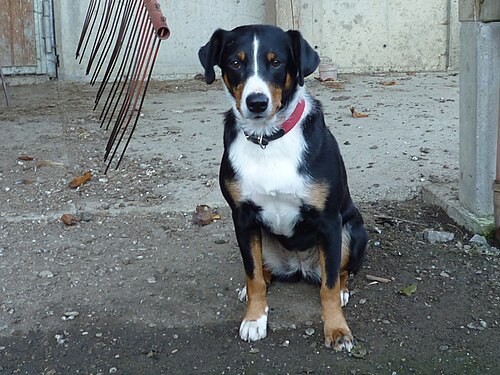
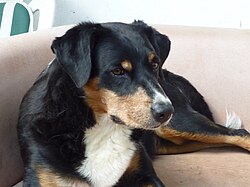
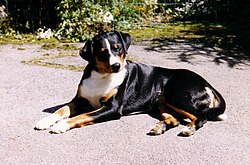
The tricolour stockhair is dense, glossy and easy to care for; regular brushing is enough, a little more often during the moult. What is decisive is keeping him occupied: the Appenzeller needs plenty of exercise and above all mental challenges such as tracking work, obedience, treibball or agility. Without a task he quickly becomes unbalanced, develops a mind of his own and tends towards persistent barking. He learns quickly and likes to work, but demands consistent, motivating and patient training from an early age.
🩺 Health
The Appenzeller Sennenhund is in principle a robust, long-lived breed and often reaches twelve to fifteen years. As with many medium-sized dogs, hip dysplasia can occur, which is why reputable breeders x-ray. Eye conditions also occur, so regular eye checks of the breeding animals are part of a responsible programme. When buying a puppy one should pay particular attention to healthy joints, clear eyes and a steady, not over-excitable temperament.
🏡 Who is this breed right for?
The Appenzeller Sennenhund suits very active, consistent people who can offer him daily exercise and mental work - ideally in a house with land, not in a cramped city apartment. For beginners he is only suitable to a limited extent, since his temperament and will demand experienced, clear leadership. In Switzerland, as a native breed, he is closely tied to rural life and feels happiest in an active setting with tasks. Those who keep him busy gain a loyal, watchful and work-loving companion.