American Foxhound
🧠 Temperament & character
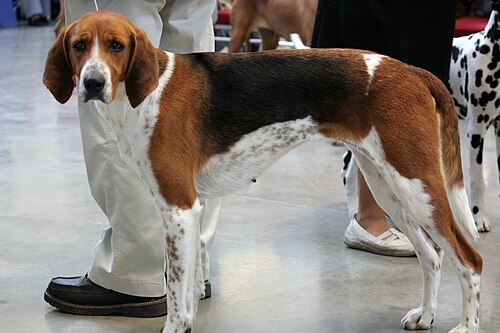
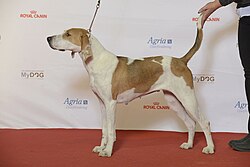
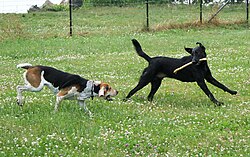
The American Foxhound is exceptionally good-natured, sociable and peaceable – a true pack dog that seeks the company of both other dogs and people. Its energy level is high, and on the trail it becomes independent and enduring, often with loud baying. With children it is patient and compatible, with other dogs usually uncomplicated. Its strong hunting drive, however, makes it a dog that quickly goes its own way without occupation.
📜 Origin & history
The American Foxhound emerged in the 18th century when English foxhounds were crossed with French and Irish hounds to create a lighter, faster dog for the vast forests of North America. George Washington is considered one of the early promoters of the breed and kept large packs himself. Over generations the dog was specifically bred for stamina, speed and a fine nose for fox hunting and coursing. To this day it has remained above all a working dog in the USA.
✂️ Grooming, care & training
The American Foxhound's short, hard coat is easy to care for and needs only occasional brushing. Demanding, by contrast, is its enormous need for exercise: it needs hours of activity every day, plenty of running and preferably a job for nose and mind. Without enough activity it becomes restless, loud and resourceful at breaking out. In training it is friendly but independent – patience, positive reinforcement and a securely fenced property are a must.
🩺 Health
The American Foxhound is considered one of the healthiest dog breeds and usually reaches an age of ten to thirteen years. Breed-typical hereditary diseases are rare; occasionally hip dysplasia and a hereditary platelet disorder (thrombocytopathy) occur. As with all drop-eared breeds, the ears should be checked regularly, and the diet should be adapted to its high activity level. Reputable breeders X-ray the hips and pay attention to heart and blood clotting.
🏡 Who is this breed right for?
The American Foxhound is best suited to very active people with a house, garden and plenty of time for exercise – ideally with a hunting or sporting background. For a city apartment, for beginners or for quiet households it is hardly suitable, as it needs plenty of exercise, safe terrain and mental activity. In Switzerland one should bear in mind that its pronounced hunting drive makes off-leash freedom in wildlife areas tricky and that in many cantons leash requirements apply during closed and breeding seasons. As a sociable pack dog it feels most at ease in the company of other dogs.