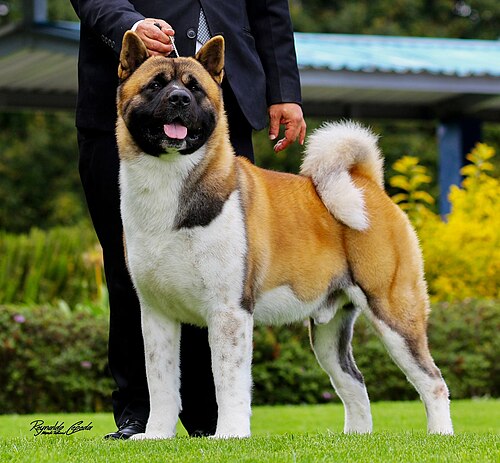
American Akita
🧠 Temperament & character
The American Akita is powerful, self-assured and deeply loyal, with a pronounced protective instinct towards his family. He meets strangers with indifference to reserve, and towards other dogs he can be dominant and intolerant. He is calm, dignified and not given to much barking, yet independent and alert - not a dog that obeys unconditionally. He seeks a close bond with 'his' people and needs consistent, confident leadership that relies on respect and trust rather than pressure.
📜 Origin & history
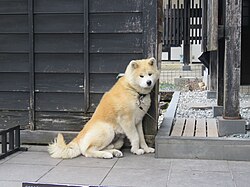
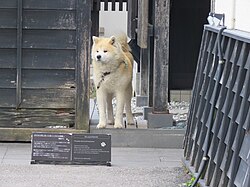
The American Akita goes back to Japanese Akitas that were brought to the USA by US soldiers after the Second World War. There the breeding developed in its own direction: towards larger, heavier and more bear-like dogs in a variety of colours, including masks. In Japan, by contrast, the Akita Inu was bred back to its original, finer type. Because of these differences, the FCI eventually recognised two separate breeds around the turn of the millennium: the Akita and the American Akita.
✂️ Grooming, care & training
The American Akita carries a dense, double coat that needs regular brushing and sheds very heavily twice a year during the moult - daily brushing is then a must. His need for exercise is moderate but constant: calm, extended walks and mental occupation suit him better than hectic dog sports. In training, early, thorough socialisation, calmness and consistency are decisive - the proud, independent Akita responds to coercion with resistance, but to respect and clear rules with cooperation. A confident, patient owner is essential.
🩺 Health
The American Akita has a life expectancy of around 10 to 13 years. Breed-typical is a tendency towards autoimmune diseases, including skin and eye conditions, as well as hypothyroidism. Hip dysplasia, the inward-rolled eyelid (entropion) and gastric torsion, dreaded in large breeds, also occur. Responsible breeders have the hips, eyes and thyroid examined and pay attention to healthy lines free of autoimmune problems. As with the Japanese Akita, a sensitivity to certain anaesthetics is known in some animals.
🏡 Who is this breed right for?
The American Akita suits calm, confident and dog-experienced people who understand his independent, dignified manner and can offer him clear structures as well as a close bond. He is not suitable for first-time owners, uncertain leadership or bustling households. He needs space and ideally a house with a well-secured garden. With well-socialised family children he can be a reliable protector; but because of his size, strength and possible intolerance of other dogs, he belongs in responsible, experienced hands and requires early, consistent socialisation.